On 18th November, we brought the industry together at Integral Ad Science's (IAS) London offices, alongside an enthusiastic virtual audience, for an afternoon of lively discussions, industry insights and some seriously passionate debating.
From the challenges of measurement harmonisation to the opportunities for premium broadcasters, the afternoon explored some of the biggest questions facing Connected TV (CTV) today. And with an audience vote that remained remarkably close, it's fair to say we haven't heard the last of this conversation.
Here's a look back at what happened.
The afternoon kicked off with a welcome from Will Hunter, Chair of IAB Europe's CTV Working Group, before Marie-Clare Puffett, IAB Europe's Senior Director, Industry Development & Marketing, took us through the recently published CTV Measurement Framework and Transparency Principles.

Developed through 18 months of industry collaboration, the Framework aims to address one of CTV's most persistent challenges: the lack of consistency in how campaigns are measured and reported across platforms and markets.
With 16 common metrics and five transparency principles, it provides a practical foundation for greater alignment across the industry.
But as Marie-Clare explained, publishing a framework is only the beginning. The real opportunity lies in getting organisations to put it into practice, from incorporating common definitions into RFPs and reporting dashboards to being transparent about measurement methodologies and limitations.
The message? The industry has spent plenty of time discussing the challenges. Now it's time to do something about them.
Next up, Joe Jackson from IAB UK was joined by representatives from Rakuten TV, Comcast Advertising, Index Exchange and Samsung Ads to tackle the question: The State of CTV Measurement in Europe: Are We Any Closer to Harmonisation?
The short answer? Yes, progress is being made, but there's still a considerable way to go.
The panel highlighted encouraging developments, from greater integration with established television measurement systems to initiatives designed to connect TV exposure with business outcomes. However, one challenge kept coming up: Europe is not one market.
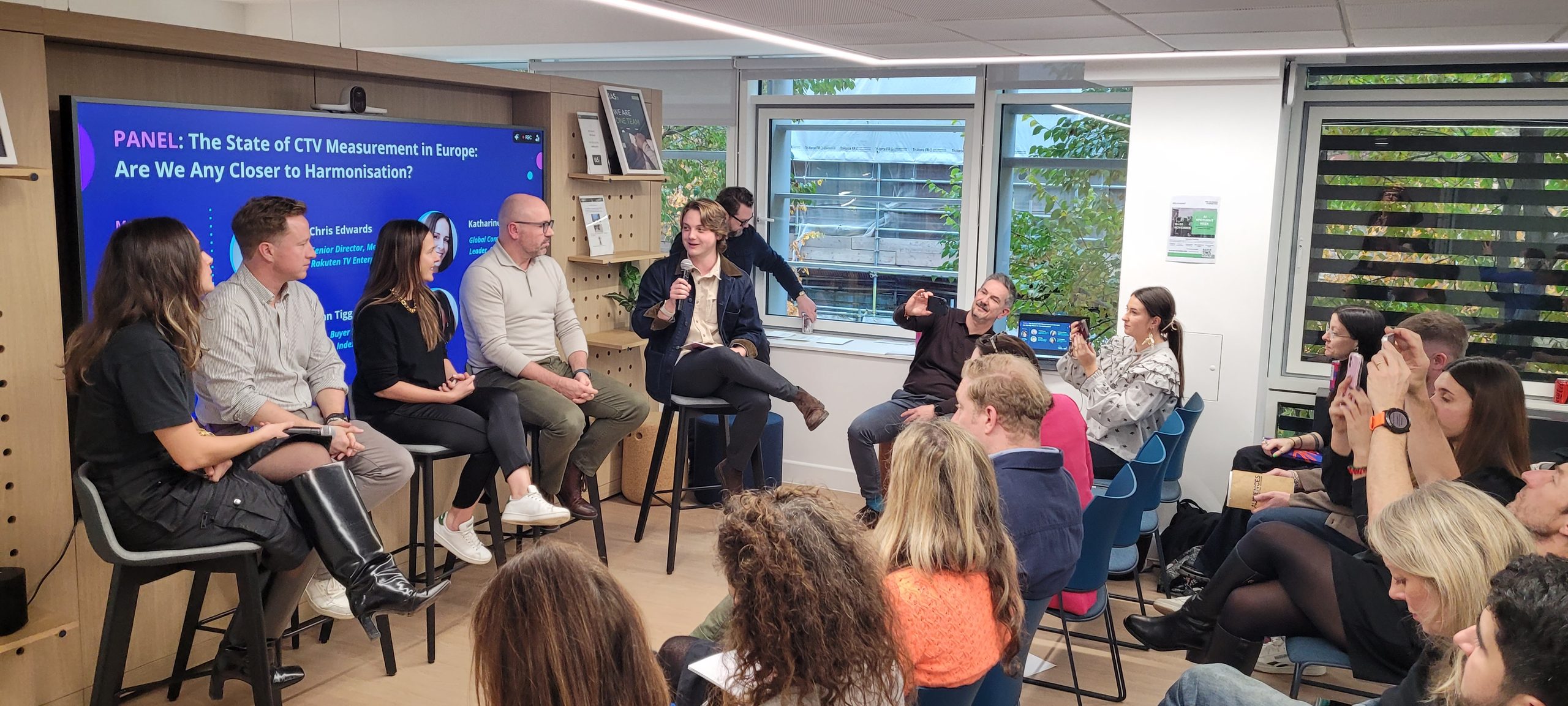
Different measurement methodologies, trading currencies, audience definitions and reporting capabilities make it difficult to compare results consistently, particularly for advertisers operating across multiple countries.
The discussion also highlighted the importance of understanding what sits behind the numbers. Two platforms might report the same metric, but if they're using different data sources or methodologies, are advertisers really comparing like with like? And then there's co-viewing. When multiple people are watching the same television screen, how do we accurately account for that audience?
It was a reminder that common definitions are essential, but transparency about how those measurements are produced is just as important.
Perhaps most encouragingly, the panel agreed that advertisers and agencies are increasingly asking for greater consistency. The demand is there. Now the industry needs to deliver.
Moving from measurement challenges, we turned to the broadcaster perspective, with Will Hunter joined by Emma from RTL AdAlliance for a fireside chat exploring how premium environments can balance the opportunities of programmatic advertising with the expectations of television audiences.
As programmatic buying becomes increasingly important to broadcasters, how can they embrace greater automation, targeting and flexibility while protecting the premium viewing experience?
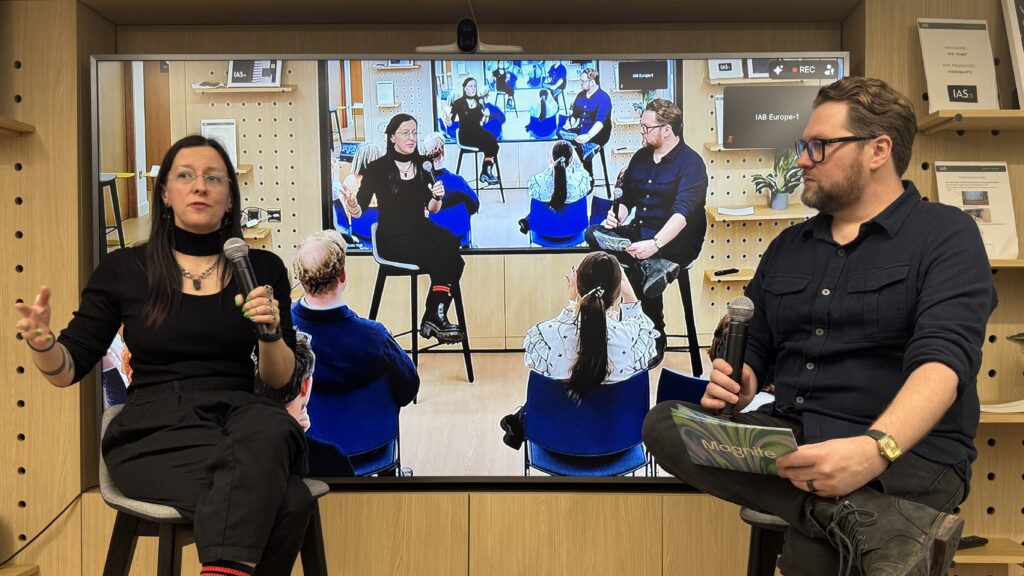
The conversation reinforced an important point: technology and efficiency matter, but the viewer must remain at the centre.
For broadcasters, premium content, quality environments and strong audience relationships remain fundamental to their value proposition.
Programmatic offers new opportunities to connect advertisers with audiences, but those opportunities need to complement, rather than compromise, the experience that makes television such a powerful advertising medium.
Which brought us rather neatly to the afternoon's main event...
After an afternoon of exploring measurement, transparency and premium environments, it was time to put the industry's opinions to the test.
Our motion: “This House Believes That CTV Should Be Planned and Measured as Part of Digital, Not Television.”
Moderated by Paul Gubbins from Google, the debate brought together two teams ready to make their case.
For the proposition: Nick Welch (IAS) and Matt Wilkinson (AUDIENCES).
For the opposition: Lisa Kalyuzhny (Nexxen) and Sofie Sue Rutgeerts (EGTA).

And let's just say neither side was prepared to back down!
The proposition argued that CTV's digital capabilities, from more granular targeting and measurement to performance optimisation, make it a natural fit within wider digital planning strategies.
Why separate CTV from other digital channels when advertisers increasingly want a connected view of their investments and outcomes?
The opposition had a different perspective.
CTV might be delivered digitally, but the viewing experience remains fundamentally television. It's a premium, full-screen environment, often enjoyed by multiple people, with distinctive strengths in brand building, attention and storytelling.
Should the industry really be measuring that experience in the same way as display or mobile advertising?
What followed was a spirited (and slightly spicy) exchange covering everything from impressions and audience measurement to CPMs, co-viewing, premium inventory and the future of media planning.
There were challenges from across the stage, plenty of laughter and some wonderfully sharp exchanges.
At one point, even the moderator's opening assurance that this was an ad tech debate rather than a political debate started to look a little optimistic. But beneath the humour was a genuinely important question.
How do we embrace CTV's digital capabilities without losing the qualities that make television so valuable?
And perhaps that is where the most interesting discussion lies.
And the Winner Is...
Well, that's where things got interesting.
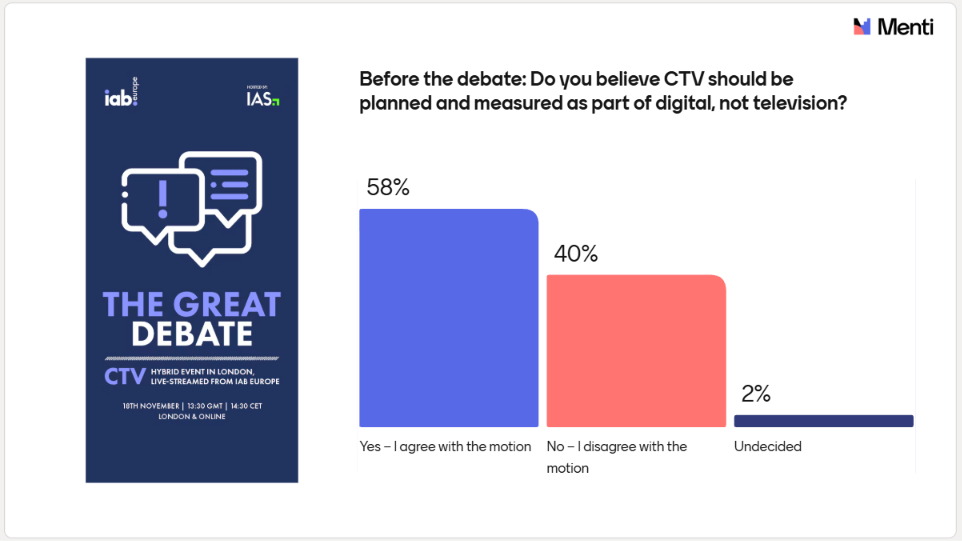
Before the debate, attendees were asked to vote on whether CTV should be planned and measured as part of digital rather than television.
The initial result was surprisingly close.
Following the arguments, challenges and passionate exchanges, the audience was asked to vote again.
And the result? Still incredibly close!
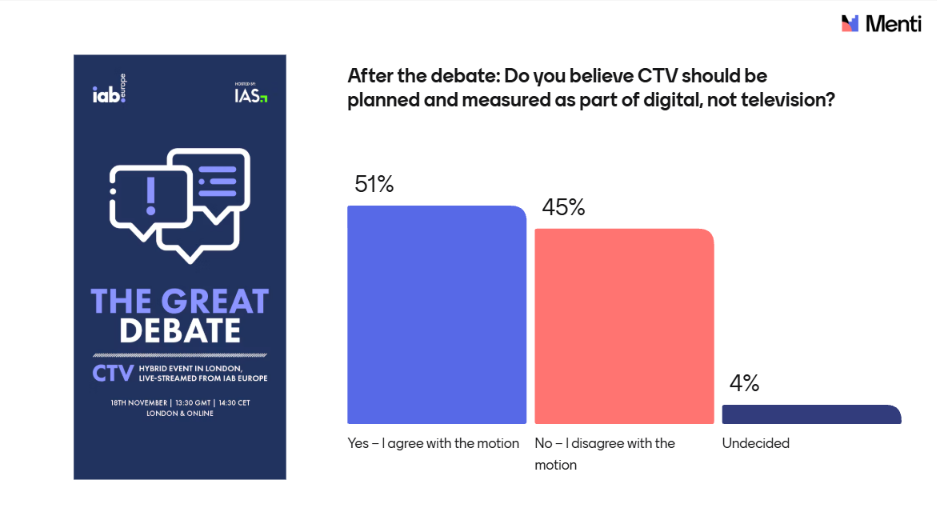
Rather than producing a clear consensus, the debate demonstrated just how divided opinion remains on this question.
Both sides made compelling arguments, and the final vote was a fitting reflection of the complexity of the topic.
Perhaps the biggest takeaway is that the industry doesn't necessarily need to agree on whether CTV belongs in one planning category or another to recognise the need for better measurement, greater transparency and stronger collaboration.
After all, regardless of which side of the debate you supported, everyone wants CTV to deliver greater value for advertisers, publishers and audiences.
While the final debate might have left opinions divided, one message emerged consistently throughout the afternoon.
CTV measurement needs to move from discussion to implementation.
The industry has made significant progress in identifying the challenges and developing common principles. The next step is ensuring those principles translate into everyday business practices.
IAB Europe's CTV Measurement Framework and Transparency Principles provide a starting point, offering common definitions and practical guidance to help buyers, sellers and measurement providers work towards greater consistency.
We encourage organisations across the ecosystem to explore the Framework, assess their current measurement approaches and consider how its recommendations can be adopted in practice.
Explore IAB Europe's CTV Measurement Framework and Transparency Principles
A Huge Thank You!
Of course, none of this would have been possible without our fantastic speakers, moderators and audience.
A huge thank you to everyone who shared their expertise, challenged perspectives and helped make the afternoon such an engaging conversation.
Special thanks to Integral Ad Science (IAS) for hosting us at its London offices and to all those who joined online and contributed to the discussion.
And finally, thank you to our CTV Working Group members for their continued commitment to tackling the industry's measurement challenges and helping turn collaboration into practical progress.
If there's one thing we've learned, it's that CTV certainly isn't short of passionate advocates.
The debate might be over for now, but the conversation is far from finished!
For more information on our CTV work and how you can get involved, please contact Ioana Mardare at mardare [at] iabeurope.eu.