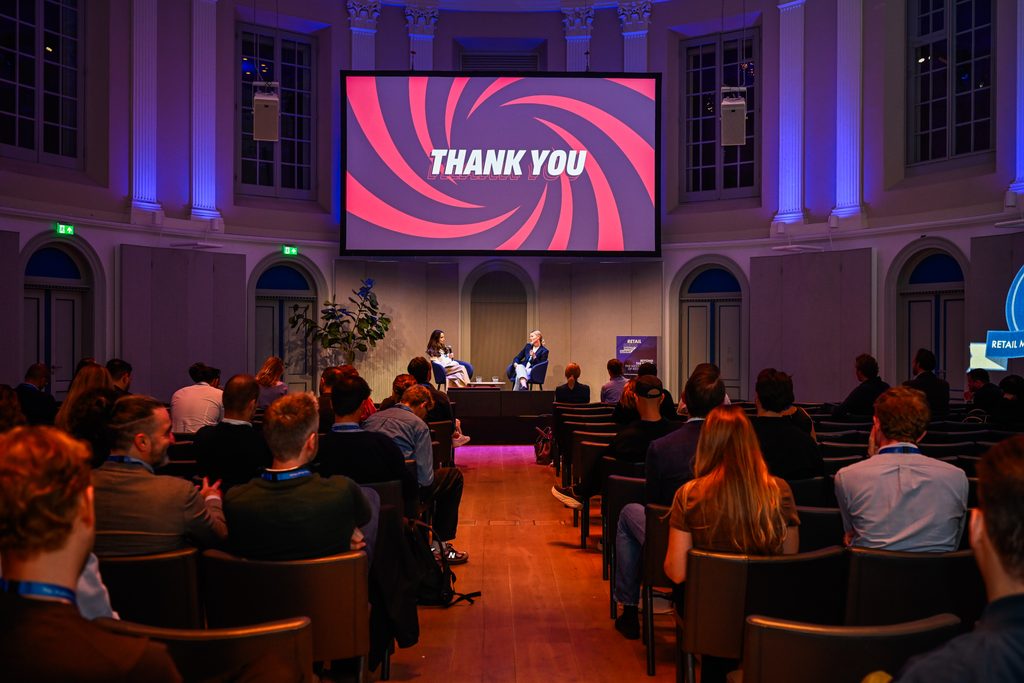
At this year's Retail Media Impact Summit in Amsterdam, IAB Europe's Retail Media Consultant, Yara Daher, hosted a session with Lieke Buisman, Head of Partner Marketing & Retail Media at MediaMarkt Benelux, to explore the opportunities and challenges of endemic, near-endemic, and non-endemic advertising.
In this blog, Yara shares her key takeaways and highlights from the conversation, from MediaMarkt's innovative Opel activation to the practicalities of measurement, pricing and brand relevance.
At our Retail Media Impact Summit (RMIS) session in Amsterdam earlier this month, Lieke Busiman, Head of Partner Marketing & Retail Media at MediaMarkt Benelux, opened with the Opel Frontera activation. It is just fun and powerful. See here how MediaMarkt deployed it.
The campaign reported orders up 101% and leads up 160%, measured as a two-week pre/post comparison of Opel’s total sales.
The idea: if they won’t come to the showroom, the showroom comes to them
Opel dealerships sit outside city centres, which makes them a bit of a trek for a shopper who just wants to kick the tyres. So Publicis, on behalf of Opel, asked a simple question: why not bring the car to the shopping trip? The brief was to launch the Frontera SUV as bold and innovative, and a supermarket-sized showroom turned out to be a good place to do that.
As Lieke put it: “If it becomes harder to get customers to the showroom, we bring the showroom to the customer.”

Following this engaging presentation, we went into a dynamic Q&A. You can find some of the highlights below:
How do you separate endemic from non-endemic? MediaMarkt doesn’t formally split the two. Most deals are near-endemic because they’re more relevant, and the team looks for a link to its assortment. It mostly works this out by testing and learning.
Where is MediaMarkt on offsite for non-endemic? It’s working with Unlimitail on audience extension using its first-party data. It started last year and is ramping up slowly, but it’s already a source of incremental revenue.
How big can non-endemic get? I pressed Lieke on this one. Her answer was small today, with an ambition of at least 10% in three years, which would be more than double the current share. The goal is incremental budget, not money moved from existing trade spend.
What has to change? Three things: more resources for non-endemic sales, separate go-to-market packages for non-endemic brands, and a stronger omnichannel offer.
How is measurement handled? The first step is agreeing on the objective: awareness, leads or sales. MediaMarkt can’t measure a non-endemic brand’s sales, so the brand measures its own, as Opel did. Kantar sits in the middle, so no data flows directly between MediaMarkt and the brand. MediaMarkt is now building a standing Kantar offer for both endemic and non-endemic partners.
How do you price it? On standard rate cards: in-store visibility, a few square metres of floor space priced on expected traffic, and every other campaign element. Opel received a first-time discount, partly because the deal came through Publicis, so the realised rate sat below the card.
Was there a control group? No. It is a before-and-after measurement
What did shoppers think? Very positive, according to the team. The bold red Frontera stood out, and the smaller Rocks was a novelty outside Amsterdam. Lieke’s reading: retailers need to offer something unexpected to keep people coming back.
Could non-endemic ads hurt the brand? Yes, guardrails need to be in place. Relevance is the ultimate goal. Relevance can come from the moment, or from a link to the assortment.
Want to hear more from Lieke? Listen to our Retail Media Impact Summit podcast conversation with Lieke Buisman here, where we continue exploring the opportunities for non-endemic advertising in Retail Media.
For a deeper understanding of the different advertiser categories and what they mean for the industry, take a look at IAB Europe's Guide to Endemic, Near-Endemic and Non-Endemic in Retail & Commerce Media.