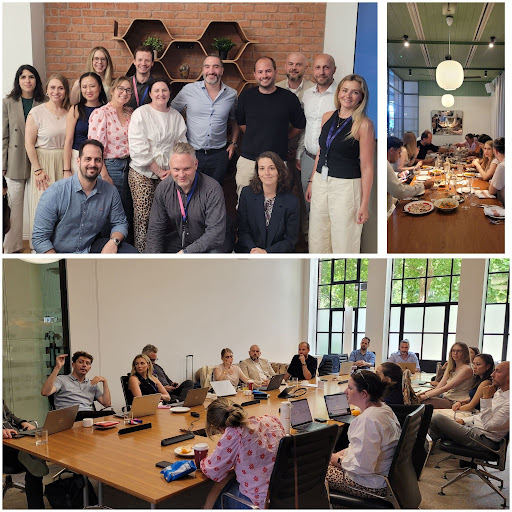
On 1st July, IAB Europe hosted its In-Store Measurement Workshop at Tesco Media in London, bringing together retailers, technology partners, and industry experts to advance the next phase of in-store retail media measurement standards.
We would like to thank the retail media networks that participated in the workshop: Douglas, Doz.pl, ICA Sverige, Media-Saturn Marketing GmbH, REWE Deutscher Supermarkt, SMG, Tesco Insight and Media Platform, and UNLIMITAIL. We would also like to extend a special thank you to Advertima, who not only contributed their expertise to the workshop discussions but also generously hosted the evening dinner — a wonderful opportunity for participants to continue the conversation in a more informal setting.
Building on the guidelines published in 2024, the session had four clear goals: align on the next phase of measurement principles, exchange perspectives on what is working in practice today, further shape a consistent industry framework, and lay the groundwork for an IAB Europe In-Store Retail Media Certification.
The workshop opened with a grounding definition: in-store retail media refers to advertising inventory that uses retail data for planning, execution, and measurement within a physical store environment. This spans digital formats - screens, audio, and connected shopping - which remain the primary focus of the current standards.
A significant portion of the discussion focused on the core media metrics that underpin in-store measurement - Ad Play, Gross Impression, Opportunity to See (OTS), and Likelihood to See (LTS) - and how consistently these are being applied across the industry.
OTS - the number of people who could pass by or hear an in-store activation — remains the closest proxy to a viewable impression in a physical environment. The group explored how it is currently being calculated and measured, whether technology and sensors should be accounted for differently when not in use, and how dwell time might be better aligned to specific store zones rather than measured at a store-wide level.
Likelihood to See, which uses sensor and analytic technology to determine whether an ad was actually noticed, prompted discussion around current adoption rates and the path toward standardisation.
Unlike online environments, individual shoppers are not identifiable in real-time in physical stores. The session explored how the industry is currently approaching audience targeting and measurement in-store - using a combination of visual attributes from computer vision, contextual location-based data, and retailer first-party data - and whether there is room to standardise the attributes that in-store audience segments should include.
The group discussed the role of loyalty data in defining key shopper segments - New to Brand, New to Category, and Lapsed Buyers - and where loyalty is already being used effectively in in-store measurement today. Standardised time frames were also presented, with three purchase cycle categories proposed: regularly purchased (0–6 weeks), semi-regular (7–26 weeks), and infrequent (27+ weeks).
The workshop then turned to sales measurement, with incrementality firmly at the centre of the discussion. The group reviewed the current standards - including Sales Variance and Brand Variance - examining who is effectively using these metrics, what their limitations are, and what should be added or updated in future versions.
A key milestone on the horizon is the development of an IAB Europe Retail Media Certification for In-Store, which the workshop began to lay the foundations for. This certification aims to provide the industry with a trusted benchmark for measurement quality and consistency.
The work continues. The next Retailer Leaders' Council will take place on 6th October in Amsterdam, alongside the Retail Media Impact Summit - a timely opportunity to build on the momentum from this workshop and push the standards conversation forward.