Interactive Advertising Bureau
post thumbnail

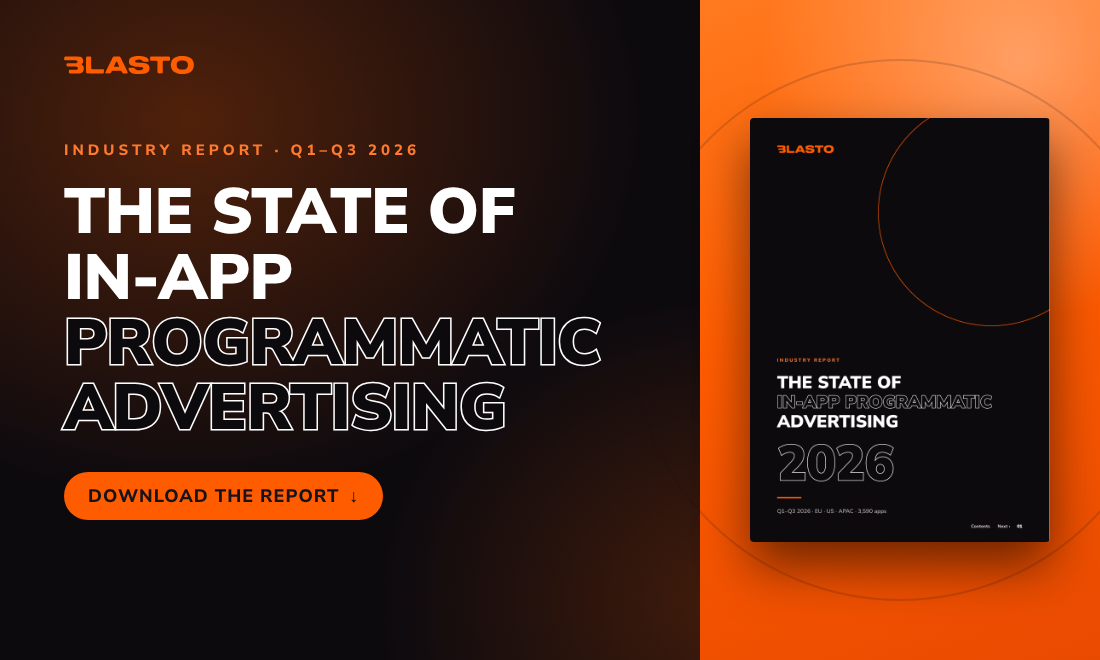
The State of In-App Programmatic Advertising 2026

Nov 24,2026
Nicole Laleva

In an app, there is no page for the buyer to see. A DSP judges every in-app impression from the bid request and the app-ads.txt file published for the app, and four signals carry most of that information: app-ads.txt, a device identifier, a TCF consent string and OM SDK.

All four are mature and free to implement. Yet how often do they travel together, and what happens to demand when they do?

To answer that, Blasto analyzed its in-app bid requests across EU, US East, US West and APAC traffic in Q1–Q3 2026, and crawled the app-ads.txt files of 3,590 apps that entered its bid stream. The result is The State of In-App Programmatic Advertising 2026, which covers:

  • The Signal Stack, the four layers that define a complete in-app request: supply, identity, consent and measurement.
  • Supply, with how long app-ads.txt seller lists have become and how much of them is resale.
  • Identity, with the iOS gap that follows App Tracking Transparency and a European Android gap the supply side can act on.
  • Consent, with the share of EU requests that carry a TCF string the buyer cannot use.
  • The Fully-Signaled Impression, the ceiling on requests that carry every applicable signal, region by region. In the EU, at most 69% do.
  • Practical recommendations for publishers, SSPs and exchanges, buyers and the wider industry.

The report is intended for publishers, app developers, SDK providers, SSPs, exchanges and buyers working in in-app programmatic advertising.

Related posts

GET IN TOUCH

IAB Europe is the European-level association for the digital marketing and advertising ecosystem

Sign up for our newsletter
chevron-leftchevron-right linkedin facebook pinterest youtube rss twitter instagram facebook-blank rss-blank linkedin-blank pinterest youtube twitter instagram
