As Retail and Commerce Media investment continues to accelerate, the conversations happening across the industry are becoming more nuanced. Beyond growth figures, businesses are increasingly focused on proving value, improving measurement, integrating teams and technologies, navigating fragmentation, and understanding where AI can deliver meaningful impact.
Against this backdrop, we have launched the third edition of our Attitudes to Retail Media Survey to capture how advertisers, agencies, retailers, media owners, and ad tech companies are approaching the next stage of market development.
The survey explores how both the buy-side and sell-side are adapting their commerce media strategies amid rapid market growth and transformation. This year’s study will provide deeper insight into investment patterns, organisational maturity, measurement expectations, barriers to adoption, and the increasing role of AI in shaping the next phase of commerce media growth.
The findings will help benchmark where the market stands today and where advertisers, agencies, retailers, and media owners expect the biggest shifts over the next 12 months. The study will also showcase the opportunity of partnering with retailers and demonstrate how commerce media can enhance digital advertising, while identifying the key industry challenges that still need to be addressed.
This year’s survey introduces several new areas of focus, including:
Buy-Side: Advertisers & Agencies
The survey examines:
Sell-Side: Retailers & Media Owners
The survey also explores:
The Role of AI
Across both buy-side and sell-side respondents, the survey will investigate where the industry expects the biggest increase in AI-driven investment, including:
The survey takes approximately 10-15 minutes to complete, and all responses will remain strictly confidential. Respondents will also receive a copy of the final results report.
We encourage advertisers, agencies, retailers, media owners, and ad tech companies to participate and help shape the future direction of Retail & Commerce Media.

To support the launch, we are also hosting Retail Media Pulse 2026: Early Signals & What Happens Next on 4th June at 14:00 CET. This fast-paced, 30-minute webinar will share early insights from this year’s study and feature exclusive insights from Colin Lewis, Co-Founder of Retail Media Works, who will present highlights from his annual 7 Challenges of Retail Media report.

Retail Media is no longer the industry’s newest growth story. It is now one of the most important forces shaping the future of digital advertising, commerce, and customer engagement.
And this October, Europe’s Retail Media leaders will come together once again at the Retail Media Impact Summit 2026 in Amsterdam.
Tickets are now officially on sale.
Taking place on 7th October at Felix Meritis, the Summit returns following a sold-out inaugural edition, bringing together senior retailers, brands, agencies, and technology companies for a full day of insights, discussion, and collaboration focused on the next chapter of Retail Media growth.
This year’s theme, “Beyond the Boom: The Next Chapter of Retail Media Growth,” reflects a pivotal moment for the industry.
Retail Media has firmly established itself as a core part of the media and commerce ecosystem. Now, the focus is shifting toward maturity, sustainability, measurement, innovation, and operational excellence.
The conversations taking place across the industry today are no longer just about growth at speed. Businesses are now asking:
These are exactly the topics that will take centre stage at this year’s Summit.
The 2026 agenda has been designed to provide actionable insights, strategic perspectives, and practical discussions around the challenges and opportunities shaping Retail Media today.
Across the day, attendees will explore:
Alongside keynote presentations and panel discussions, attendees can also expect:
We’re also excited to announce our first confirmed speakers, with senior leaders already joining the agenda, including:

Daniel Knapp, Chief Economist, IAB Europe

Yara Daher, Retail Media Specialist, IAB Europe

Jason Wescott, Global Head of Commerce Solutions, WPP Media

Bram van Asperen, Senior Commercial Manager, Advertising, Booking.com
More speaker and session announcements will follow in the coming weeks.
Whether you are building a Retail Media Network, managing brand investment, developing commerce media strategies, or enabling Retail Media technology, the Retail Media Impact Summit is designed to help you:
With strong interest already building following last year’s sold-out event, now is the perfect time to secure your place.
Find out more about the event here, and register to secure your tickets for the 2026 Retail Media Impact Summit below.
Please note: If you're a member of IAB Europe, you are eligible for discounted tickets. Please reach out to the team at communication [at] iabeurope.eu for more information.
Brussels, Belgium, 20th May 2026 – IAB Europe has announced the opening of a public feedback period for carbon.json, a proposed specification designed to enable voluntary, machine-readable disclosure of emissions intensity data by digital advertising systems.
Developed through IAB Europe’s Methodology & Framework Working Group, with input from ad tech companies and sustainability vendors, and in close partnership with Ad Net Zero throughout the development process, carbon.json aims to improve the accuracy and consistency of emissions estimates across the digital advertising supply chain.
The proposed specification enables advertising systems to disclose infrastructure emissions intensity in a standardised, comparable format. These disclosures can then be incorporated into campaign- and path-level emissions calculations by stakeholders across the ecosystem, including DSPs, SSPs, exchanges, ad servers, publisher monetisation platforms, and other intermediaries.
carbon.json has been designed to support organisations operating across a range of infrastructure environments, including public cloud, private cloud, owned data centres, hybrid environments, and managed infrastructure.
The specification is intended to support more accurate and transparent emissions estimation across digital advertising. By making environmental impact metrics available in a structured and machine-readable format, carbon.json can help improve the modelling of supply path emissions and reduce reliance on broad industry averages and default assumptions.
The public feedback process is intended to test the proposed specification with the wider market, identify implementation considerations, and gather input from companies that may publish, consume, validate, or integrate carbon.json disclosures into their own systems and methodologies.
Following the consultation period, IAB Europe intends to address industry feedback and explore the integration of a methodology leveraging carbon.json into the next version of the Global Media Sustainability Framework (GMSF) in partnership with Ad Net Zero. The next version of the GMSF Playbook is due to launch at the end of June 2026.
The proposal is available on IAB Europe’s website here.
The specification is also available on GitHub, including examples for calculating carbon.json disclosures and a JSON schema here.
The related digital advertising emissions methodology is available here.
IAB Europe is inviting stakeholders across the digital advertising ecosystem, including advertisers, agencies, publishers, ad tech companies, sustainability vendors, cloud providers, and measurement and verification providers, to review the proposal and share feedback.
The public feedback period is open until 19th August. Comments and questions can be sent to IAB Europe’s Data & Innovation Strategist, Dimitris Beis, at beis [at] iabeurope.eu.

Our Senior Director of Industry Development & Marketing, Marie-Clare Puffett, shares why measurement and transparency in CTV are so important and how stakeholders across the ecosystem can help shape a common framework for the future of CTV measurement.
According to IAB Europe’s 2026 Attitudes to Digital Advertising report, Connected TV (CTV) leads future growth expectations, with nearly seven in ten respondents identifying it as the industry’s top growth opportunity, ahead of both AI and Retail & Commerce Media.
That momentum reflects the growing importance of streaming and premium video environments within modern media strategies. Advertisers are increasingly investing in CTV because it combines the impact of television with the targeting and flexibility of digital.
But while CTV continues to grow rapidly, measurement consistency and transparency have not kept pace.
Today, advertisers, agencies, publishers, and tech providers often work with different definitions, methodologies, and reporting standards across the ecosystem. Metrics such as impressions, reach, completion rates, and outcomes can vary significantly depending on the platform or partner being used. This fragmentation creates operational complexity, limits comparability, and ultimately impacts trust.
That’s why industry collaboration around standardised measurement frameworks has become so important.
IAB Europe’s CTV Measurement Framework and Transparency Principles aim to address these challenges by helping establish a common foundation for how CTV advertising is measured and reported across the European market.
The framework focuses on two critical areas: measurement consistency and transparency.
Why Transparency Matters
Transparency is increasingly essential as advertisers demand greater visibility into where ads run, how inventory is sourced, what methodologies are used, and how campaign performance is calculated.
Without clear standards and shared expectations, it becomes harder for buyers to compare performance, optimise investment, and scale campaigns confidently across the ecosystem.
At the same time, common measurement standards help reduce inefficiencies across the supply chain. Agencies spend less time reconciling inconsistent reports, publishers can communicate value more clearly, and advertisers gain greater confidence in the channel.
Greater transparency also helps create a more accountable and sustainable ecosystem as CTV continues to mature. Establishing shared expectations around measurement and reporting will be critical to supporting long-term growth and unlocking greater investment across the market.
Importantly, the framework is not designed to limit innovation. Instead, it aims to create a shared baseline that supports collaboration, interoperability, and sustainable growth as the CTV market continues to mature.
As CTV develops into a core part of media strategies, building trust through transparency and standardisation will be critical to unlocking its full potential for advertisers, publishers, broadcasters, streaming platforms, and technology providers alike.
Industry collaboration will play a key role in ensuring the ecosystem develops in ways that deliver greater consistency, accountability, and confidence across the supply chain.
We recently launched our CTV Measurement Framework and Transparency Principles for public comment, inviting stakeholders from across the ecosystem to help shape the future of CTV measurement in Europe.
The consultation is an important opportunity for the industry to provide feedback, contribute expertise, and help ensure the framework reflects the needs of buyers, sellers, broadcasters, streaming platforms, ad tech providers, and measurement companies alike.
You can review the framework and submit feedback before the consultation closes on 12th June here.
To learn more about our CTV work and how you can get involved, please contact our Senior Director of Industry Development & Marketing, Marie-Clare Puffett at puffett [at] iabeurope.eu.
Earlier this month, we were delighted to deliver a bespoke Retail Media training session for around 70 participants at bol’s offices in Utrecht, the Netherlands. The interactive in-person session brought together teams from across the business for a day focused on strengthening Retail Media knowledge, encouraging discussion, and exploring future opportunities within the space.
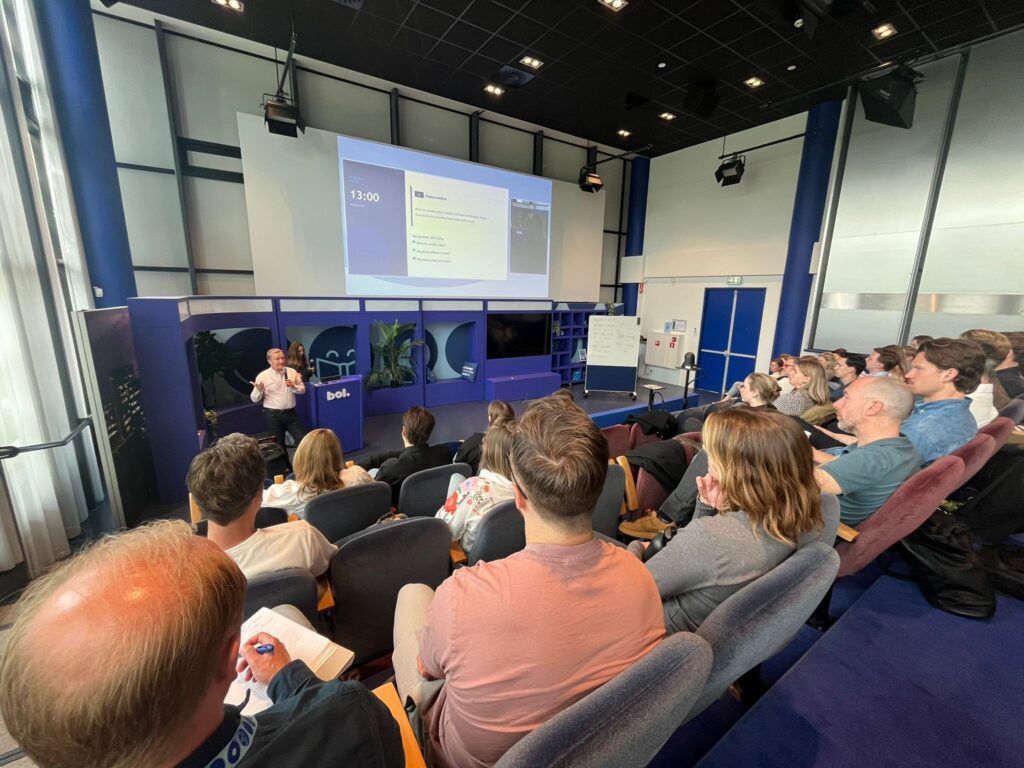
The session was led by our Retail Media Consultant, Yara Daher, and Retail Media Specialist, Colin Lewis, on behalf of IAB Europe and was tailored specifically to bol’s business needs and learning objectives, ensuring the content was practical, relevant, and directly applicable to attendees’ day-to-day roles.
Together, we explored:
Throughout the day, participants were encouraged to ask questions, share perspectives, and discuss the challenges and opportunities they are seeing across the Retail Media ecosystem. The collaborative format helped create an engaging learning environment while ensuring the session reflected bol’s specific priorities and ambitions. The afternoon also included interactive roundtable discussions, where smaller groups explored topics in greater depth, including measurement, trade and media, and omnichannel strategies.
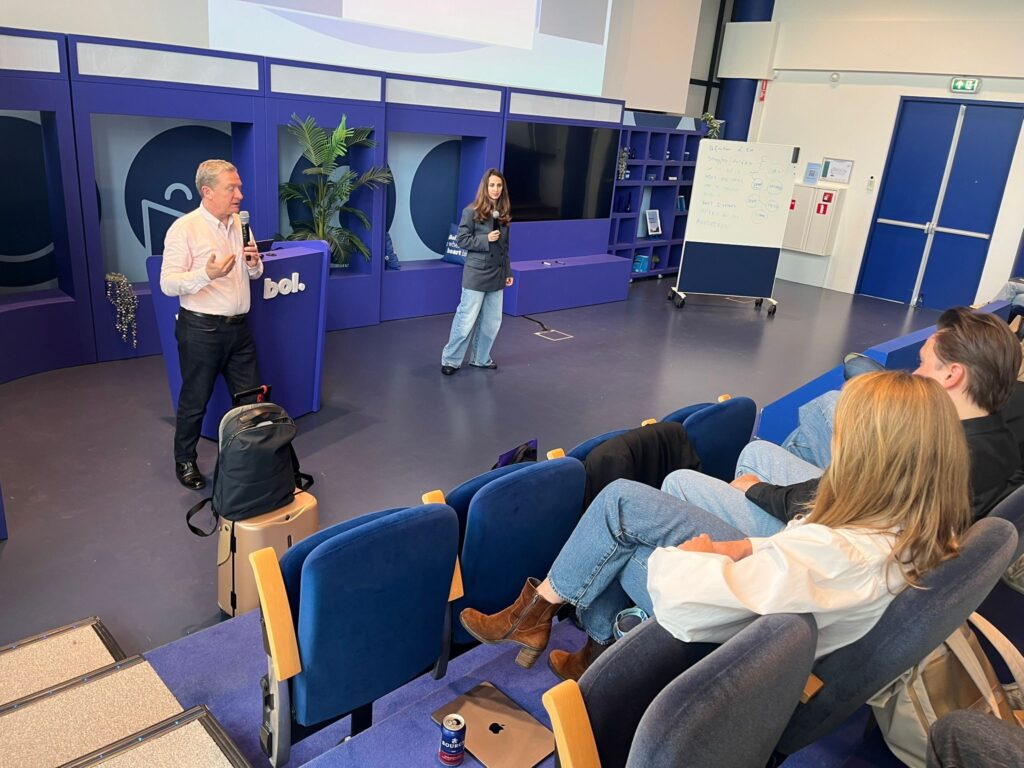
Our bespoke Retail Media training sessions are designed to meet teams where they are and equip participants to design, sell, and evaluate Retail Media with confidence.
One of the biggest advantages of our bespoke sessions is the flexibility and interactivity they provide. Each programme is shaped around an organisation’s goals and can include:
Our programmes also focus on delivering operational outcomes for teams, helping businesses cut through inconsistent Retail Media reporting, compare performance more clearly, connect onsite, offsite, and in-store impact, and bring structure to fragmented omnichannel strategies.
Find out more about bespoke training in our one-pager here.
If you’re interested in discussing a bespoke Retail Media training session tailored to your needs, we’d love to hear from you. Email the team at training [at] iabeurope.eu for more information.

Additionally, for those looking to strengthen their understanding of Retail Media more broadly, registrations are now open for our upcoming online Retail Media Essentials Course taking place on 7th and 8th July 2026. Learn more and sign up here.
IAB Europe members are eligible for a discount on our online training programmes. Please contact the team at training [at] iabeurope.eu to find out more.
This summer, we are bringing back two specialist online training courses designed to help digital advertising professionals like you strengthen your knowledge and expertise in Retail Media and sustainability in digital advertising.
With Retail Media continuing to grow in importance across the ecosystem and sustainability remaining a key industry topic, understanding the fundamentals, frameworks, and practical applications behind both areas is increasingly valuable for digital advertising professionals. Our summer training programmes are designed to provide practical, industry-focused learning that participants can apply directly within their roles and organisations.

Returning this summer with an updated format, our Retail Media Essentials course will now be delivered as one programme across two days, with two-hour online sessions each day, making it easier for participants to fit the training into their schedules.
The course provides a practical introduction to the Retail Media landscape, covering:
Designed for retailers, brands, agencies, ad tech companies, and digital advertising professionals looking to build or strengthen their foundational understanding of Retail Media, the course offers practical, industry-focused learning delivered by Retail Media specialists Yara Daher and Colin Lewis
Learn more and register here.

Our Condensed Course on Environmental Sustainability in Digital Advertising also returns this July, exploring key sustainability challenges and industry approaches across the digital advertising supply chain.
Participants will gain practical insights into:
The course is designed for those looking to better understand the current sustainability landscape in digital advertising and the approaches you can take to support more sustainable practices.
The course will be delivered by our Data & Innovation Strategist, Dimitris Beis.
Learn more and register here.
Alongside our online training programmes, we also offer bespoke Retail Media training tailored to the specific needs, objectives, and maturity levels of organisations and teams.
We recently partnered with bol to deliver a customised Retail Media learning programme designed specifically for their teams. Read more about the collaboration here and download our one-sheet here for more information.
Discount codes are available for IAB Europe members participating in our online training programmes.
To learn more about available discounts, group participation opportunities, bespoke training, or the courses themselves, please contact the team at training [at] iabeurope.eu.

Retail Media growth shows no signs of slowing down. But the conversation is changing.
That’s why we’re excited to announce that our Retail Media Impact Summit will return for its second edition on 7th October in Amsterdam.
Following a successful inaugural event, this year’s Summit will once again bring together leaders from across the Retail and Commerce Media ecosystem for a day of insight-sharing, collaboration, and networking.
This year’s theme reflects the industry’s shift towards greater sophistication, accountability, and integration across the digital advertising ecosystem.
From retailer first-party data and AI-driven commerce media to creators, programmatic activation, and measurement, the Summit will explore the opportunities, challenges, and innovations shaping the market today.
Topics on the agenda will include:
Designed for retailers, brands, agencies, and technology providers alike, the Summit will provide practical insights and meaningful conversations for those looking to stay ahead in a fast-moving market.
As one of Europe’s leading hubs for innovation, technology, and commerce, Amsterdam provides the ideal backdrop for conversations shaping the future of Retail Media. With its international accessibility and strong digital ecosystem, the city continues to attract decision-makers and industry leaders from across the European market.
The first edition of the Retail Media Impact Summit welcomed senior leaders from across the industry for a day of insightful discussions, collaboration, and networking.
Attendees described the event as “insightful”, “collaborative”, and “forward-thinking”, while sessions explored some of the biggest opportunities and challenges facing the Retail Media ecosystem today.
You can revisit highlights from last year’s event here.
Tickets for the 2026 Retail Media Impact Summit will go live very soon.
In the meantime, you can:
A limited number of sponsorship opportunities are still available for organisations looking to position themselves at the forefront of the conversation and connect with senior leaders.
If you’re interested in partnering with the Retail Media Impact Summit, we encourage you to get in touch soon to secure one of the remaining opportunities.
Contact Marie-Clare Puffett at puffett [at] iabeurope.eu for more information.
We look forward to welcoming the industry back to Amsterdam this October for another day of impactful conversations, collaboration, and industry insight.
Retail Media data is rapidly transforming Connected TV (CTV), bringing verified purchase signals and real shopper intent into an environment traditionally built on broad reach and demographics. In this Q&A, members of our CTV Working Group explain how first‑party retail audiences are enabling more precise targeting, stronger personalisation, and closed‑loop measurement that links TV exposure directly to browsing and buying behaviour.
They also explore the practical realities behind this shift- from GDPR‑compliant data collaboration to interoperability challenges - and share emerging examples from Europe and beyond. Together, their insights show how CTV and Retail Media are converging into a powerful new model of commerce‑driven advertising that blends brand impact with measurable performance.
A big thank you to the following contributors for sharing their thoughts:

Emmanuel Josserand, Sr Dir. Brand, Agency and Industry Relations, Comcast Advertising

Mariana Vieira, Product Manager at SAPO (MEO), representing IAB Portugal

Andreas Hamdorf, Lead Strategic Partner Management, esome advertising technologies for BVDW

Sotiris Oikonomou, Managing Director, MarkApp Media
Emmanuel: "Connected TV and Retail Media are converging to create a new kind of commerce-driven TV advertising, where brands use retailer first-party data to buy premium TV inventory and then measure real sales impact. Instead of treating TV as just an awareness channel, marketers can now activate Retail Media audiences (built from loyalty cards and transaction data) on CTV, reach those shoppers in brand-safe, high-attention environments, and then read back outcomes like sales lift, new buyers, or basket value."
Mariana: "It’s bringing a new level of intelligence to CTV by adding verified purchase and intent signals to an environment that previously relied on demographic or content‑based segments. With first‑party retail audiences, brands can finally reach frequent buyers, category shoppers or consumers actively considering a product - a level of precision that wasn’t possible before. This leads to more relevant and timely personalisation, with creatives that reflect real shopping mindsets. And when you combine this with the scale and premium quality of CTV, it starts to deliver performance‑like results while still building brand impact."
Andreas: "Retail Media data can improve targeting of audiences in CTV. This can lead to increased attention, which in turn can have a positive impact on performance KPIs. CTV advertising is currently still relatively expensive compared to advertising on linear TV. More precise, impact-driven targeting using Retail Media data can help offset the higher CPM. However, this requires that this data can be utilised on CTV channels and platforms. This, in turn, requires that retail media providers make their data available for their own targeting purposes as well as for other advertisers, and that they have the necessary GDPR-compliant consent to do so."
Mariana: "It brings something CTV has been missing for years: a clear link between exposure and actual shopping behaviour. Because the data is rooted in verified transactions, brands can finally understand whether someone who saw a CTV ad went on to browse, add to cart or buy. This creates a more reliable form of closed‑loop measurement and helps distinguish real campaign impact from natural purchase patterns. And when these insights are layered onto CTV’s premium environment, advertisers gain a much sharper view of incremental sales, category lift and new‑buyer penetration, making attribution more grounded in business outcomes rather than proxy metrics."
Andreas: "I agree with what Mariana has already said. However, the effort required to link retail media data regarding conversions with prior advertising interactions is still very high at this point. It’s also only possible on a few CTV platforms. But it’s clear that the market is currently undergoing significant changes, and such options for measurement and attribution will increasingly become part of everyday business in the future. "
Emmanuel: "Connected TV is emerging as a central platform for Retail Media by merging the broad household reach and engagement of traditional TV with the precision of digital targeting. This makes it a seamless addition to both on-site and off-site Retail Media campaigns. As Retail Media budgets seek to expand their reach and achieve measurable results beyond search and social, CTV provides an opportunity to extend these strategies to the largest screen in the home. With closed-loop attribution, it connects TV exposure directly to in-store and online sales, focusing on key performance indicators such as incremental sales, new customer acquisition, and increased basket size, rather than just reach and gross rating points.
Beyond this, AI can serve as a smart layer, leveraging contextual insights and performance metrics, bridging the gap between brand storytelling and direct purchase actions, fully embedding CTV into the Retail Media ecosystem."
Sotiris: "Retail tells you what and when. CTV tells you where attention lives. Integrate at planning, activate contextually, measure against incremental sales.
Andreas: "I’d like to respond here from the brand’s and agency perspective, for which Retail Media data plays a role in both planning and operational execution.
If we can successfully link product sales data with upstream advertising interactions, attention measurement, and downstream performance, this can help us manage CTV campaigns more precisely.
Currently, however, we face the challenge that this linkage is only possible to a limited extent and, for example, also fails because many CTV providers, as well as SSPs and DSPs, do not transmit relevant content and contextual information. We could already measure, plan, and manage far more precisely if all parties involved could work with the necessary content information, as well as the necessary cross-system identifiers."
Sotiris: "Currently we see three main challenges, especially when trying to follow the same patterns as the US:
Andreas: "We also face the challenge that people often use different devices for digital product purchases than they do for CTV advertising exposure. In Europe, and especially in Germany, the CTV device is often the big screen in the living room. With simple IDs from digital targeting and measurement, we often don’t know who is sitting in front of the screen and whether this is the same person who then makes the purchase using a different device. The most accurate and reliable way to make such an attribution is through hashed email addresses."
Sotiris: "There are two examples to note here:
The lesson here is that the winners are consolidating data, inventory and measurement under one roof. Independent ad tech companies win by offering the neutral layer, contextual translation across multiple CTV publishers, without locking brands into a walled garden."
Emmanuel: "TV Retail Connect, a French collaborative marketplace, in France has already demonstrated how powerful the combination of CTV + Retail Media data can be. In a campaign orchestrated across nine different addressable TV channels (France 2, France 3, France 5, M6, W9, 6ter, BFM TV, RMC Story, RMC Découverte), the marketplace targeted Carrefour cardholders identified as coffee-bean buyers using Unlimitail data. TV exposure was matched with Carrefour purchase data, comparing exposed vs. non-exposed groups under strict GDPR conditions to isolate business impact. Further details and results can be found here."
Andreas: "Whilst I can’t name any specific companies, we’ve already gained some initial experience with CTV campaigns in which we used retail media data for targeting. For example, we ran a campaign for a cat litter manufacturer and used targeting data from various providers that had collected this information via retail media. We specifically targeted cat owners and buyers of cat products. We observed that on CTV channels where this data could be utilised, we reached cat owners far more precisely than if we had relied solely on contextual or sociodemographic targeting. The use of targeting data in general—and specifically the data made available through retail media—is gaining increasing attention. As CTV providers in Germany become more open to making their user data available via data clean rooms for analysis, matching, and activation, we will see numerous examples of retail media data usage in CTV over the coming months."
The Transparency and Consent Framework (TCF) is widely recognised as a standard for publishers that sell ads - but it is equally relevant for advertisers operating their own websites and apps. As advertisers increasingly rely on audience and campaign measurement tools and first-party data strategies, TCF provides a structured way to establish legal bases, ensure transparency, and communicate user choices to third-party partners.
The TCF includes a taxonomy of 11 purposes, and advertisers are free to choose which one they want to use.
Advertisers, while implementing the TCF, should:
A tailored approach ensures clarity for users and avoids unnecessary complexity in your Consent Management Platform (CMP).
Advertisers should only display vendors they work with in their CMP.
A curated vendor list avoids requesting consent for irrelevant partners and simplifies privacy choices for end-users.
The TCF additional vendor list might be useful to use the flexibility that TCF provides to determine the selection and align it with your operations.
TCF allows advertisers to go beyond a standard setup by:
This level of control ensures that your CMP configuration reflects both your legal requirements and your business model. Please see here the technical specifications on Github to find out more on the possible restrictions.
Advertisers can leverage the Publisher TC segment to manage their own data processing activities.
This enables you to:
This is particularly valuable for scenarios such as personalised marketing communications or integrations with non-TCF vendors.
TCF provides advertisers with a powerful framework to manage users’ transparency and consent. By selecting relevant purposes, curating their list of vendors, and leveraging features like the Publisher TC segment, advertisers can build a user-friendly consent experience.
To help advertisers implement the TCF, IAB Europe has created advertiser-specific implementation guidelines. Advertisers are encouraged to consult these resources when implementing TCF on their digital properties to ensure alignment with industry standards and best practices.
For any questions about how to implement the TCF as an advertiser, please reach out to tcf.compliance [at] iabeurope.eu.

Join our webinar on 19 May at 13:00 CET to discover how the Transparency and Consent Framework can benefit not just publishers, but also advertisers and retailers. Click here to find out more and register below to secure your space.
Programmatic on‑site Retail Media is moving from concept to reality, reshaping how brands buy, how retailers monetise and how technology partners enable scale. We asked members of our Retail & Commerce Media Committee to share their views on what’s coming next, from data and privacy to interoperability, infrastructure and the shifting balance of power across the ecosystem.
A big thank you to the following contributors for sharing their thoughts:

Robert Kiessling, Data Partnerships Director, The Trade Desk

Paul Dahill, Managing Director, Sales EMEA, Koddi

Ollie Walls, Sr Director, Nexxen
Robert: "Programmatic on-site capabilities will fundamentally shift Retail Media from isolated, retailer-specific buying environments toward a more connected, scalable marketplace model. Today, power largely sits with retailers operating closed ecosystems. As programmatic standards emerge:
The balance of power will not disappear but rebalance toward those who can enable connectivity, transparency, and measurable outcomes at scale. Closed ecosystems will remain relevant, but open, interoperable approaches are likely to capture incremental growth due to superior scalability and advertiser alignment."
Paul: "Programmatic on-site capabilities are likely to reshape Retail Media by shifting it from a fragmented, retailer-by-retailer buying model toward a more integrated media channel that sits alongside display, video, CTV, and social in existing DSP workflows. Koddi’s research study, The State of Programmatic Retail Media, suggests that buyers see programmatic as a way to reduce operational friction and unlock scale: 80% view programmatic as key to solving fragmentation, and 96% of agencies and 92% of brands say they are open to buying on-site retail media through a DSP. The report also finds that eight in ten respondents say it would be easier to move more budget to DSP-enabled retailers, with nearly half saying it would drive a significant shift in spend.
In practical terms, that does suggest a shift in the balance of power, but not a simple transfer from retailers to ad tech. Brands and agencies would gain more leverage through easier access, more centralised activation, and the ability to compare retail media more directly with the rest of their media mix. At the same time, retailers would gain access to larger brands and full-funnel budgets that today sit outside traditional trade and shopper marketing allocations. The report is explicit that this can be done without retailers surrendering control, provided they preserve guardrails around data, exclusive formats, curated deals, and auction governance through a retail media-specific SSP.
So the likely outcome is less a loss of retailer power than a rebalancing of roles. Brands gain workflow simplicity and buying flexibility; retailers gain new demand and stronger monetisation opportunities; and ad tech partners become enabling infrastructure rather than owners of the retailer relationship."
Oliver: "Retailers will continue to hold a strong position given their proximity to the transaction and their ownership of high-quality, deterministic data. What changes is how that value is accessed. Programmatic introduces more fluid, auction-based buying, enabling brands to engage with retail media in a way that’s closer to the rest of the digital ecosystem, thus bringing greater flexibility, transparency and optimisation.
In this model, the combination of unique data and media becomes central. Retailers aren’t just inventory owners; they are curators of high-intent environments enriched by signals that can’t be replicated elsewhere. Programmatic makes those signals more actionable at scale."
Oliver: "First-party data is the foundation of on-site retail media, but its value increasingly depends on how it can be activated responsibly and at scale. As privacy expectations continue to tighten and evolve, the focus is shifting toward approaches that preserve the integrity of that data, such as clean rooms, cohort-based modelling and other privacy-enhancing technologies.
The real opportunity lies in connecting those privacy-safe signals to activation in a way that still captures intent. Retail environments naturally combine unique data (e.g., purchase behaviour, browsing patterns) with unique media moments (e.g. search, product pages, checkout). Brands that can operationalise this combination – and continue protecting user trust while enabling meaningful targeting and measurement – will be best positioned to drive sustainable, long-term growth."
Robert: "First-party data is the core asset underpinning on-site retail media, but its value can only be fully realised when it is activated in a privacy-safe, interoperable way.
Programmatic scaling depends on:
Without privacy-safe activation, first-party data remains confined to individual retailer silos, limiting its effectiveness. With it, first-party data becomes a scalable signal for cross-channel decisioning and full-funnel measurement."
Paul: "First-party data is central to making programmatic on-site Retail Media valuable at scale because it is what allows retailers to preserve the relevance and performance that differentiate retail media in the first place. Any move toward programmatic has to preserve what already makes the channel effective, namely first-party data, privacy, and relevant user experiences. It also identifies the ability to use first-party data for improved targeting as one of the most valued benefits of DSP-enabled on-site buying.
Scaling is possible with privacy-safe activation through retailer-controlled SSP infrastructure. Specifically audience targeting should allow retailers to route audience segments to DSPs via secure, permissioned signals, enabling retargeting, sequential messaging, and full-funnel strategies while preserving shopper privacy and on-site relevance. Clean room, CRM, and DSP integrations are all part of privacy-compliant attribution and measurement.
In other words, first-party data is not just an input; it is the asset that makes programmatic on-site Retail Media defensible. But scale only becomes sustainable if activation is privacy-safe and retailer-governed. Retailers need strict control over which advertisers can access their ecosystem, what signals are exposed in transactions, and how campaigns are approved and served. Without that, programmatic scale would risk undermining the trust and user experience that make onsite retail media effective in the first place."
Paul: "True on-site programmatic only works when retailers build for control first, not just access. That starts with infrastructure that can connect onsite inventory to DSP demand without breaking the retail experience: tight ad server and SSP orchestration, clear auction logic, SKU-level decisioning, durable merchandising controls, and measurement that can stand up to scrutiny. If the pipes are not built to preserve relevance, pacing, prioritisation, and creative quality, then programmatic will create noise instead of growth.
Just as important is the operating model around that infrastructure. Retailers need governance over who can buy, what can run, how pricing is managed, and when campaigns can be paused or adjusted. They also need teams and processes that connect monetisation, product, engineering, and merchandising, because onsite programmatic is not just an ad sales feature. It affects the shopper journey. The opportunity is real: Koddi’s research found that 96% of agencies and 92% of brands are open to buying onsite retail media through a DSP, and eight in ten said it would be easier to shift more budget to DSP-enabled retailers. But that demand only becomes sustainable when retailers have the technical discipline and operational guardrails to make programmatic feel native to the onsite experience rather than bolted onto it."
Robert: "For on-site programmatic to work at scale, retailers must establish a set of capabilities:
Technical foundations:
Operational foundations:
Without these elements, programmatic on-site remains fragmented and manual, limiting both advertiser adoption and revenue potential."
Oliver: "To realise the full potential of on-site programmatic, retailers need to move beyond simply automating existing placements and focus on three foundational elements: real-time infrastructure to support dynamic decisioning, integrations with programmatic demand and measurement platforms to ensure consistency at scale and a clear commercial model that defines how programmatic complements direct sales.
Perhaps most importantly, these elements need to work together. The ability to connect and activate data and media within a unified environment is what turns programmatic from a workflow into a performance driver. Without that connection, it risks becoming incremental automation rather than meaningful evolution.
When these foundations are aligned, though, retailers can unlock the full value of their environments -- making outcomes easier to drive, scale and measure."
Robert: "Standardisation and interoperability are the key unlocks for scaling demand in on-site retail media.
Today’s fragmentation creates friction:
Standardisation enables:
Interoperability extends this further by:
Together, they transform retail media from a set of isolated opportunities into a scalable, full-funnel channel — unlocking incremental budgets rather than redistributing existing spend."
Paul: "Standardisation and interoperability are what turn on-site Retail Media from a collection of one-off buys into a scalable media channel. Buyers do not want every retailer to feel identical, but they do want the basics to work in familiar ways: cleaner activation, more consistent workflows, comparable reporting, and the ability to manage retail media alongside the rest of the media mix. When those foundations are in place, on-site inventory becomes easier to plan, easier to buy, and easier to defend in front of broader brand and performance budgets.
The growth effect is straightforward. The less friction there is between retailer environments and the systems buyers already use, the easier it becomes to move dollars into the channel. Koddi’s research found that 80% of buyers view programmatic as key to solving fragmentation, and 49% said DSP access would encourage a significant shift of non-retail media budgets into retail media. That is why interoperability matters so much: it lowers the operational cost of buying, improves confidence in measurement, and helps retail media compete for larger, more strategic budgets. The retailers that win will be the ones that standardise the buying experience, where it helps buyers, while still protecting the data, formats, and shopper context that make their onsite environments valuable in the first place."
Members are driving Retail Media growth and shaping the landscape by:
All of the work of the Committee can be found in our Retail Media Hub here.
Find out more about our work and how you can get involved by contacting Marie-Clare Puffett - puffett [at] iabeurope.eu.
Under the Belgian CIP (Convention d’Immersion Professionnelle) Programme
IAB Europe has an opening for a paid internship under the Belgian Convention d’Immersion Professionnelle (CIP) programme for an initial period of 6 months, with the possibility of extension up to 12 months, to support its technical team in the management and evolution of industry-wide standards. The role is intended for a technically minded individual to work at the heart of the Transparency & Consent Framework (TCF), contributing to the standardisation of privacy and data protection across the digital advertising ecosystem.
This internship is structured as a professional immersion programme with defined learning objectives focused on developing technical expertise in digital advertising standards and privacy frameworks.
Location: Brussels.
The intern’s primary focus will be the technical evolution of the TCF and its application across web and mobile environments. Key tasks include analysing web and app architectures, network protocols, and cookie management systems to audit and verify compliance with the TCF. You will work closely with our international team to provide technical guidance and support for the framework’s implementation by industry stakeholders.
The role provides a unique vantage point on how large-scale digital systems navigate a complex regulatory landscape, offering exposure to a wide range of commercial actors, including major publishers and global agencies.
The successful candidate will possess a strong academic background in Computer Science or a related Engineering field. While we do not expect a policy expert, a genuine interest in how technology and regulatory frameworks influence each other is essential. You should have a solid grasp of web/mobile fundamentals and data analysis, along with the natural curiosity to assume responsibility within a small, high-performance team.
English fluency is a must, and another European language is a plus.
Effective communication skills and the ability to work collaboratively in an international environment are vital. We are fully prepared to provide on-the-job training regarding specific industry context; what we require is a candidate with the technical foundations to dive into the architecture of the digital advertising ecosystem.
The role is based in Brussels. Compensation is in line with Belgian CIP regulations and offers a competitive package for a technical profile.
Please send a CV and expression of interest to careers@iabeurope.eu.
About IAB Europe
IAB Europe is the European-level association for the digital marketing and advertising ecosystem. Its mission is to promote the interests of the industry and enable cross-ecosystem collaboration amongst its national federation and corporate members to drive solutions to shared challenges and develop frameworks, standards, and programmes that contribute to sustainable growth and innovation.

As programmatic enters its next phase, what are the signals the industry should be paying attention to? IAB Europe’s Marketing & Communications Director, Lauren Wakefield, shares her reflections from our latest Virtual Programmatic Day.
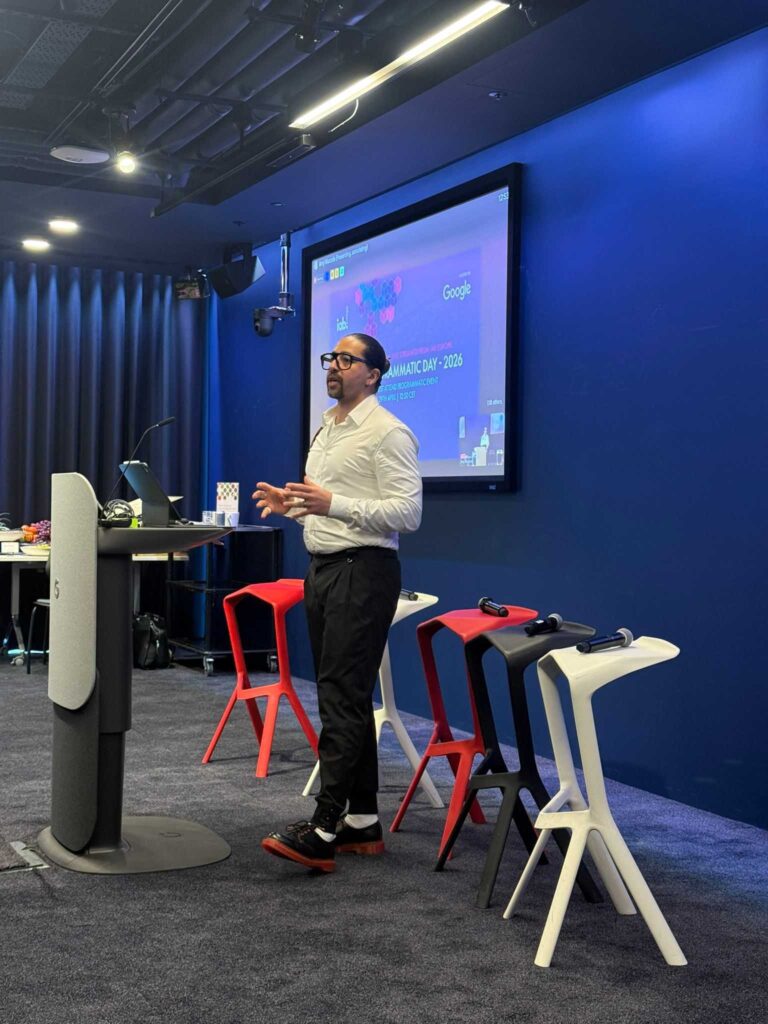
This week, we brought the industry together for our annual Virtual Programmatic Day, hosted at Google’s London office, and it really felt like one of those moments where you can take stock of how far programmatic has come, while also seeing clearly where it’s heading and what needs to happen next.
With a room packed full of industry leaders, the conversations were both practical and forward-looking. From CTV and AI to measurement, monetisation, and the growing need for collaboration, there was a strong sense that while the ecosystem is becoming more complex, it’s also opening up new opportunities.
A big thank you to Google for hosting us, to our event host, Wayne Tassie, Group Director, Netherlands at DoubleVerify & Chair of our Advertising & Media Committee, to our brilliant speakers for sharing their expertise so openly, and to everyone who joined us, both in person and virtually. It really was great to see so many great minds come together.
Here are some of the key takeaways from the day.
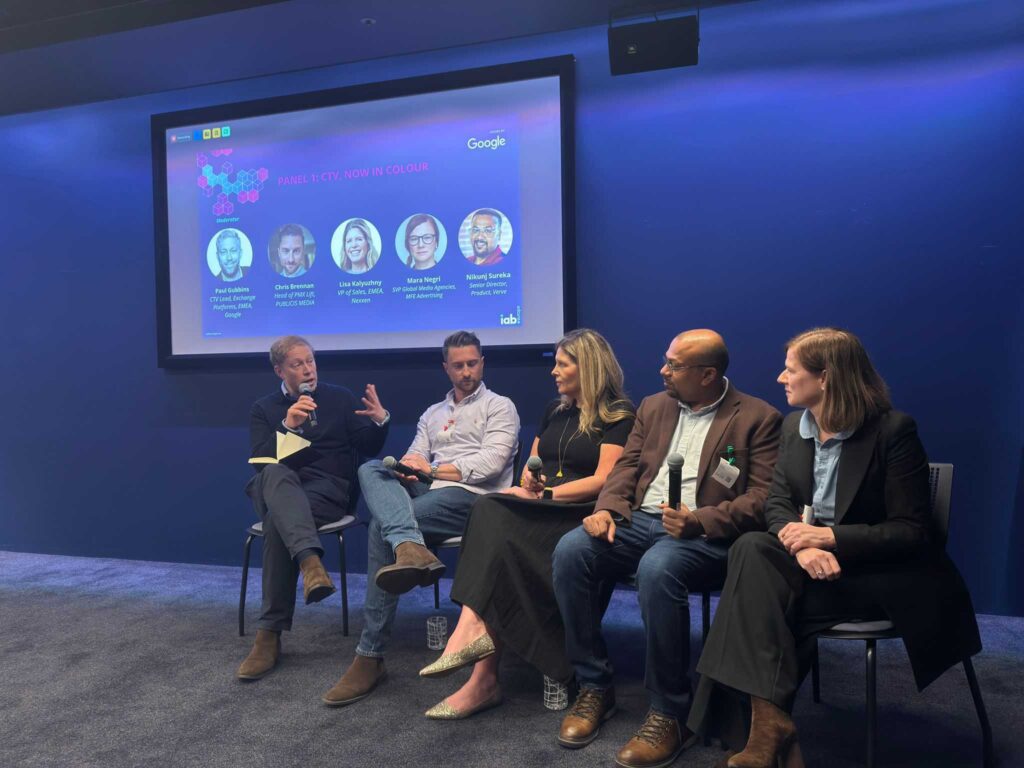
Following Wayne’s welcome to the room, our first panel took to the stage to discuss all things CTV. Moderated by Paul Gubbins at Google, Chris Brennan (Publicis Media), Lisa Kalyuzhny (Nexxen), Mara Negri (MFE Advertising), and Nikunj Sureka (Verve) explored how the ecosystem is evolving, from data and measurement challenges to the rapid expansion of formats and supply.
Key Takeaways:
CTV is maturing into a full-funnel channel, but it’s not a one-size-fits-all
CTV is no longer viewed purely as a branding channel. There is a clear shift towards performance-driven outcomes, with advertisers increasingly focused on incrementality and business results rather than just reach. At the same time, every broadcaster, platform, and market operates differently, requiring more tailored approaches.
Data is the differentiator, but fragmentation remains
While access to programmatic audiences has improved, fragmentation across supply and inconsistent data frameworks still create challenges. Measurement across BVOD, AVOD, FAST, and broadcaster environments remains complex, with the focus now shifting from access to activation and how signals are used effectively.
A ‘total video’ approach is emerging
Advertisers are planning more holistically across linear TV, BVOD, AVOD, and FAST, blending traditional and programmatic KPIs. However, aligning teams and achieving a unified view of measurement is still a work in progress.
Supply is growing,b but so is complexity
The growth of AVOD and FAST has increased available inventory, while broadcasters continue to offer trusted, premium environments. The challenge is no longer access to supply, but how to navigate fragmentation and activate it effectively.
Activation hasn’t hit its stride yet
Despite more inventory than ever, activation is still not operating at the level the market expects, with ongoing challenges in stitching campaigns together across environments.
New formats are expanding the opportunity
From home screen placements to more interactive formats, innovation is accelerating. These formats offer new ways to engage audiences, but scaling and transacting efficiently remain key considerations.
The barrier to entry is lowering
Advances in programmatic technology and AI-driven tools are making TV more accessible, particularly for SMEs, unlocking new advertisers and budgets.
The future is outcome-based and AI-enabled
The industry is moving towards outcome-based measurement. Better cross-platform measurement, more consistent data signals, and stronger collaboration will drive the next phase of growth, alongside smarter use of AI.
As measurement continues to be a key focus area for the industry, we encourage you to explore and share your feedback on our new CTV Measurement Framework, now open for public comment here.
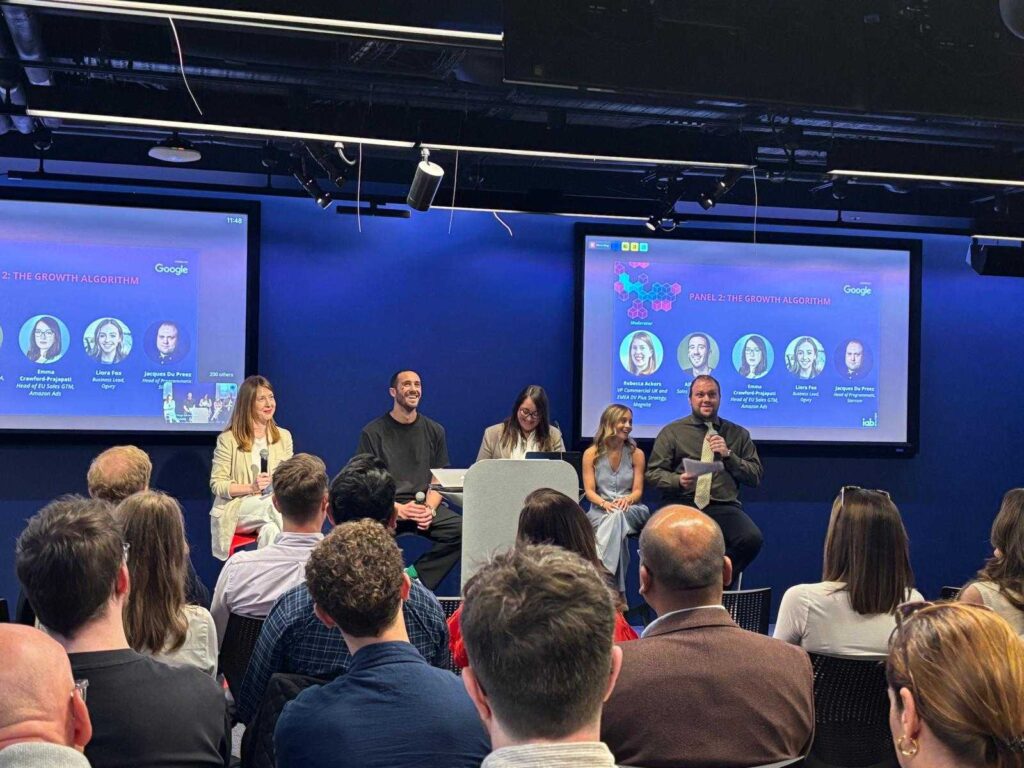
As programmatic approaches its third decade, our next panel explored what will power its next phase of growth. Covering AI and data frameworks, plus new channels and changing buying strategies, our moderator, Rebecca Ackers at Magnite, dived into what programmatic’s secret ingredient for success could be with Alberto Ciot (Quantcast), Emma Crawford-Prajapati (Amazon Ads), Liora Fox (Ogury), and Jacques Du Preez (Starcom/Publicis).
Key Takeaways:
There is no ‘secret sauce’, but fundamentals matter more than ever
Success in programmatic continues to rely on strong foundations: trusted data, transparent partnerships, and privacy-first strategies. Collaboration across the ecosystem remains critical.
AI is transforming workflows, but not replacing strategy
AI is already accelerating optimisation and automation, reducing manual processes and enabling scale. However, human expertise remains essential for strategic decision-making and orchestration.
Curation and new buying models are responses to complexity
The rise of curation reflects a need to simplify the supply chain and improve efficiency. While approaches continue to develop, the goal remains the same: better alignment between buyers, sellers, and audiences.
Measurement and trust are key to unlocking growth
Fragmentation in audience definitions and measurement frameworks continues to hold the industry back. Rebuilding trust and creating more consistent, interoperable approaches will be critical.
Creative is becoming a growth lever, powered by AI
AI-driven creative production is lowering barriers for advertisers, particularly SMEs, enabling faster testing and iteration and improving campaign performance.
Towards autonomous, seamless programmatic
Looking ahead, the vision is clear: fewer manual processes, fully integrated channels, and AI-powered execution. Programmatic is expected to become indistinguishable from the broader media ecosystem - seamless, automated, and privacy-first.

Moderated by Lauren Saving, at Index Exchange, our final panel of the day, featuring, Emmanuel Ogidan (FreeWheel), Nick Welch (IAS), Pierce Cook-Anderson (DMG Media), Petri Kokkonen (Relevant Digital / IAB Finland) focused on how monetisation strategies are adapting to new buying behaviours and market dynamics.
Key Takeaways:
Programmatic demand continues to grow, but balance is key
While programmatic is playing an increasingly central role in monetisation strategies, direct IO remains the foundation for many premium publishers. Strong direct relationships still drive the majority of revenue, with programmatic opening up additional scale and flexibility alongside it.
Quality and transparency are critical differentiators
In a crowded and competitive market, premium content continues to drive premium revenue. Publishers that can clearly demonstrate quality, are best placed to attract advertiser investment, particularly as budgets shift towards social and walled gardens.
Data is a core asset, but activation is the challenge
Publishers hold valuable first-party data, but the key challenge is making it accessible and actionable for buyers in a privacy-safe way. Unlocking this effectively will be critical to competing and differentiating in the market.
Curation can add value, but requires scrutiny
Curation is helping to match the right inventory with the right demand and can improve efficiency across the supply chain. However, inconsistent practices and unclear margins mean publishers need to carefully assess how it is applied and where it delivers real value.
Publishers are navigating a shifting landscape
With increasing pressure from platforms and changing buyer behaviour, publishers need to stay focused on what drives monetisation. This means investing in their own environments, strengthening data and signal quality, and maintaining transparency as a key differentiator.
Moments and formats are unlocking new revenue opportunities
Major events, such as the World Cup, are acting as catalysts for monetisation, with broadcasters launching new channels and formats, including FAST, to capture incremental audiences and demand.
Publishers must lean into their strengths
Trusted content, strong user relationships, and contextual relevance remain powerful advantages. Publishers who can combine these with smart data strategies, flexible buying routes, and clear value propositions will be best positioned to drive sustainable revenue growth.
Across all three panels, one theme stood out: programmatic is entering a new phase, defined by convergence, automation, and a stronger focus on outcomes.
From the continued rise of CTV to the growing role of AI and the ongoing push for transparency and trust, the industry is moving towards a more connected and efficient ecosystem. But unlocking its full potential will require continued collaboration, standardisation, and a shared commitment to innovation.
Keep your eyes peeled for our event wrap-up with the session recordings on our Knowledge Hub very soon.
In the meantime, if you’d like to learn more about the work of our Advertising & Media Committee and Programmatic Working Group and how you can get involved, you can explore our overview here or reach out to the team at communication [at] iabeurope.eu.