Brussels, Belgium - 30th April, 2026 - IAB Europe, the European-level industry association for the digital marketing and advertising ecosystem, has today opened its Connected TV (CTV) Measurement Framework and Transparency Principles for public comment, setting out a bold step toward tackling one of the industry’s most pressing challenges: transparency in CTV.
CTV investment is accelerating rapidly, fuelled by 24.5% growth in video display driven by SVOD and BVOD formats. Yet concerns around visibility and measurement quality persist. Today, only 30% of advertisers and publishers report full visibility into where ads run, while fewer than half use quality verification tools. Meanwhile, 27% of stakeholders lack consistent insight into brand suitability, highlighting a clear need for industry-wide standards.
Built in collaboration with sell-side and buy-side stakeholders, and shaped through two dedicated industry workshops with companies including Amazon Ads, EGTA, Freewheel, IAB UK, MFE ProSiebenSat1, Pubitalia, RMB Belgium, RTÉ, and Samsung Ads, the Framework delivers a unified set of metrics and definitions to bring consistency, comparability, and accountability to CTV measurement.
It applies across the full spectrum of digital video environments, from broadcasters and streaming platforms to digital-first services, reflecting how audiences consume video today.
Crucially, the Framework is underpinned by a set of transparency principles that establish clear expectations for measurement providers and ecosystem partners, building on IAB Europe’s broader efforts to address transparency and consistent measurement challenges in CTV, as outlined in a recent industry overview.
“Connected TV represents a huge opportunity for our industry, but its continued growth depends on trust,” said Marie-Clare Puffett, IAB Europe’s Senior Director Industry Development & Marketing. “With this Framework, we’re taking an important step toward creating a more transparent and accountable CTV ecosystem. One where buyers and sellers can transact with greater confidence and clarity.”
Will Hunter, Director, SpringServe EMEA, Magnite & IAB Europe’s CTV Working Group Lead, also commented, "This framework creates a key stepping stone for providing insight, control, and accountability on both the supply and demand sides of the CTV ecosystem. Due to the rapid expansion of CTV in Europe, agreeing on clear measurement and transparency standards has been difficult. Therefore, we are motivated to bring all stakeholders together to build a framework that is valuable to all sides."
IAB Europe is inviting all stakeholders, including advertisers, agencies, publishers, ad tech companies, and measurement providers, to review the Framework and share feedback.
The public comment period is open until 12th June, and submissions and questions can be sent to Marie-Clare at puffett [at] iabeurope.eu.
The framework can be found on IAB Europe’s website here.
Programmatic advertising is entering a new phase: one defined not just by growth, but by transformation. As new channels scale and technologies like AI reshape the ecosystem, the industry is being challenged to balance innovation with transparency, efficiency, and control. The question is no longer where programmatic can go next, but how it adapts to meet increasing expectations.
This year’s Virtual Programmatic Day (VPD) 2026, taking place on 29th April at 12:00 CET, both virtual and in-person in London, will explore exactly that.
Returning as a hybrid event hosted by Google, VPD 2026 will bring together industry leaders for a series of live-streamed panels and discussions, alongside a limited in-person audience in London. With a focus on the trends shaping programmatic today, the event offers a forward-looking view of where the industry is headed next.
Whether you plan to join us online or in London, you can secure your place here: register for virtual attendance and apply for in-person participation to be part of the conversation shaping the future of programmatic advertising.
Please note: Exclusive in-person access for IAB Europe Members only; limited capacity, confirmation required.
To set the stage, we spoke with the Chair of our Advertising & Media Committee, Wayne Tassie, Group Director, Netherlands at DoubleVerify, on what makes this year’s event particularly relevant, the themes to watch, and what attendees can expect.
Programmatic infrastructure is increasingly becoming the operating layer for digital advertising, and that matters because AI is about to place that infrastructure under far greater pressure and scrutiny.
Conversations are no longer solely about scaling media buying more efficiently. We are moving into a much more consequential shift in how media is planned, activated, optimised and measured across increasingly fragmented environments, and the role of AI within these workflows.
That creates complexity, but it also creates a very real opportunity. The industry has spent plenty of time talking about disruption. The more important question now is what we choose to build on top of it.
If we get that right, this period will not be remembered solely for the noise around AI. It will be remembered as the point where digital marketing became materially more intelligent, accountable and effective.
Everyone has questions right now. Far fewer people have credible answers.
What makes Virtual Programmatic Day especially relevant is that it brings together the people actually shaping what comes next across programmatic, CTV, streaming, measurement and AI-driven optimisation.
The industry is moving through a meaningful reset. Standards are shifting, buying models are evolving, and algorithmic decision-making is becoming more deeply embedded in how media is traded and managed.
That is exactly why events like this matter. They move the conversation beyond theory and into what the industry needs to understand, challenge and get right next.
Streaming and CTV has fully emerged into a non-negotiable for advertisers. Impression volumes and investment grows every year, as our industry keeps up with evolving consumer trends in how they interact with content.
The CTV landscape is fragmented though, with numerous apps, devices and varying levels of inventory quality. This can create scale, but it also introduces inconsistency in how media is bought, measured and valued.
This inventory is also becoming increasingly accessible through programmatic infrastructure and starting to behave more like a standalone ecosystem.
That is where a major part of the opportunity lies. Greater access to high-quality video, combined with more flexibility and the potential for data-led activation.
The fundamentals still need work to justify investment. Consistent measurement, accountability and fraud prevention remain critical if the market is going to scale with confidence.
If we want long-term investment in CTV and streaming TV to accelerate, the industry needs to standardise faster, govern better and remove ambiguity from how value is measured and protected.
AI is at the forefront of probably the most significant technological revolution since the internet's inception. This transformative wave is reshaping industries, and advertising is no exception. As AI evolves, it’s introducing new tools and methodologies that change how brands interact with consumers and how advertising campaigns are designed and executed.
We’re seeing similar opportunities and discussions that came with the programmatic revolution about twenty years ago; how to harness new technology and capitalise in a way that fits with our current industry ways of working.
Advertisers and agencies are working with more campaign-related data than ever before, with a wide array of metrics and KPIs. Data-driven optimisation is low hanging fruit for AI efficiencies.
AI in digital advertising is an enormous and multi-faceted topic. Whether it’s generative AI or LLMs changing brand to consumer engagement, or agentic AI revolutionising workflows, it’s a super exciting time for our industry and we should all tackle these topics collaboratively.
Anyone responsible for how media is planned, bought, measured or governed should be paying close attention to this moment.
That spans advertisers, agencies, platforms and publishers navigating a period of rapid change across programmatic, AI and media operations.
What they should take away is a clearer, more practical understanding of what is actually changing across the ecosystem and what that means for how they operate day to day, across teams, processes and decision-making.
This is not a distant shift. It is happening now. The organisations that engage with it early and adapt with intent will move ahead. The rest will spend the next few years reacting.
Join us on 29th April at 12:00 CET for our programmatic event of the year.
Whether you attend virtually or apply to join us in person in London, this is your opportunity to hear from leading experts, explore the latest trends, and be part of the conversation shaping the future of programmatic advertising.

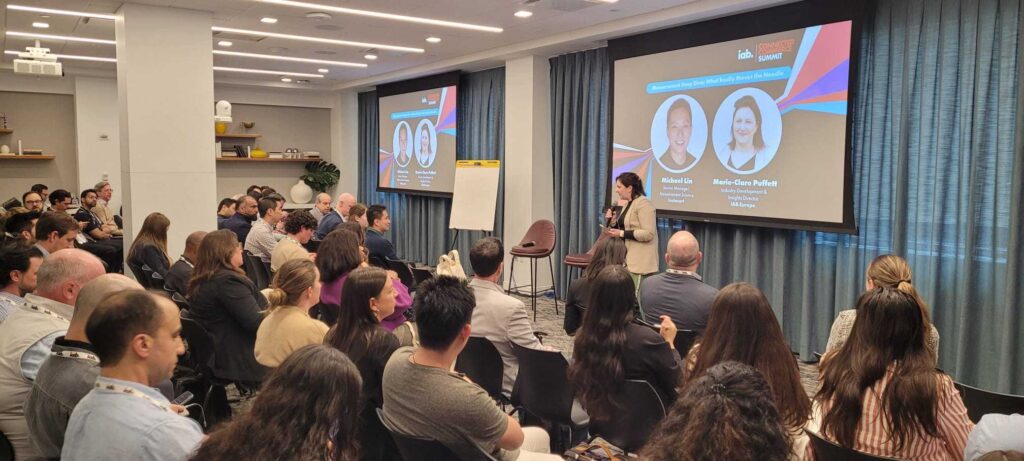
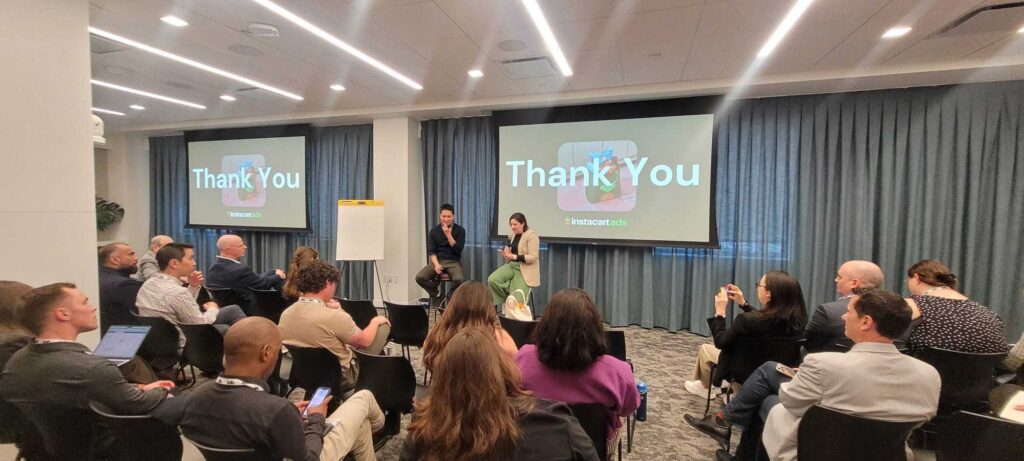
Our Senior Director, Industry Development & Marketing, Marie-Clare Puffett shares highlights from her IAB Connected Commerce breakout session 'Measurement Deep Dive: What Really Moves the Needle'.
At the IAB Connected Commerce Summit in New York, I had the pleasure of moderating a session with Michael Lin, Senior Manager of Measurement Science at Instacart, who opened with a sharp, timely message: marketing measurement is shifting from correlation to causation. And that shift is no longer theoretical - it’s becoming a requirement.
For years, marketers have relied on patterns that look meaningful. When revenue rises alongside ad spend, it’s easy to assume the ads worked. But as Michael pointed out, those trends are often shaped by everything except marketing performance - distribution changes, pricing, competitive dynamics, or even internal budget biases. Correlation can tell us what happened, but not why it happened.
Other industries solved this problem long ago. Medicine uses randomised controlled trials to determine what truly works. Marketing is finally catching up. The IAB’s measurement framework makes this explicit, ranking methods by their ability to establish causality, with RCTs at the top, followed by model‑based approaches, and legacy tools like Marketing Mix Modeling (MMM) and attribution further down the ladder. The takeaway: not all measurement answers the same question, and treating them as interchangeable leads to flawed decisions.
This is where Retail Media changes the game. Platforms like Instacart can directly link exposure to purchase behaviour, enabling true experimentation at scale. Instead of inferring impact, marketers can observe incrementality directly, using deterministic data and controlled ad exposure.
Causal measurement is simple in concept: compare outcomes between a group that saw ads and a group that didn’t. The difference is the incremental lift. But doing this well requires rigor - proper randomisation, validated control groups, and clear statistical thresholds. When executed correctly, it delivers the metrics that matter most: sales lift and incremental ROAS.
MMM still has a role, especially for long‑term planning and cross‑channel strategy. But it was built for a world without granular, user‑level data. In today’s Retail Media environment, its limitations are more visible. The future isn’t either/or, it’s MMM for strategic context, experiments for ground truth.
As Michael emphasised - and as the audience Q&A reinforced - adopting causal measurement is as much a mindset shift as a methodological one. Start small, test incrementally, and let the evidence build. Once you see causality clearly, it becomes hard to rely on anything less.
Marketing doesn’t suffer from a lack of data. It suffers from a lack of clarity. Causal measurement brings that clarity, separating signal from noise and grounding decisions in evidence rather than assumption. As Retail Media continues to scale, this won’t just be a competitive advantage; it will be the expectation.
Want more insights into the IAB Connected Commerce event? Check out Marie-Clare's reflections from the event in our blog post here.
IAB Europe is seeking a highly organised and proactive Project Manager to support its Policy and Legal teams. This role is central to ensuring the effective coordination, delivery, and communication of key policy initiatives, regulatory responses, and legal frameworks impacting the digital advertising ecosystem across Europe, including the Transparency & Consent Framework (TCF).
The ideal candidate thrives in a fast-paced, multi-stakeholder environment and has a strong interest in public policy, digital technology, and industry self-regulation.
Support the business cadence of the Policy and TCF instances
Brussels, Belgium (with flexible/hybrid working options).
Please send your CV and a short cover letter to: careers@iabeurope.eu
With Earth Day just around the corner on 22nd April, it’s the perfect moment to take small, meaningful steps towards reducing our environmental impact, starting with our digital habits.
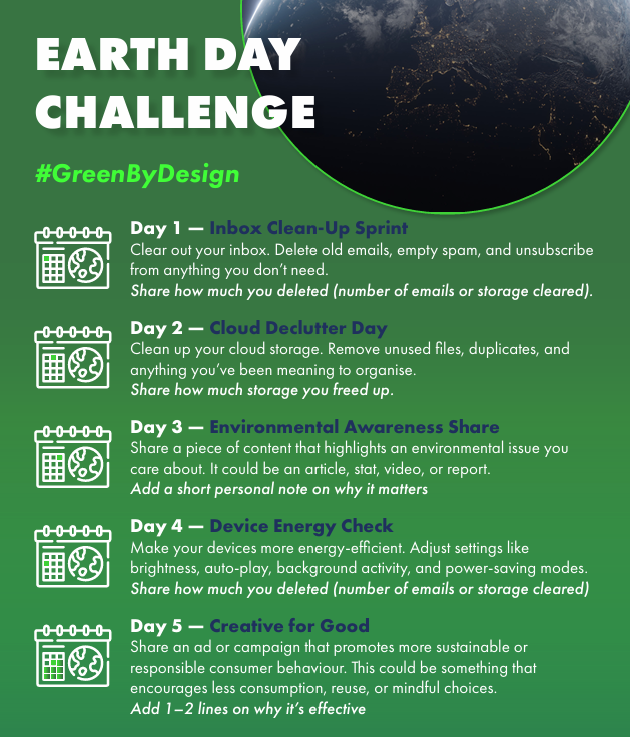
This year, our Sustainability Standards Committee is launching the #GreenByDesign Earth Day Challenge - a simple, practical five-day initiative designed to help you shrink your digital footprint.
Kicking off on 20th April, the challenge focuses on five easy actions:
Throughout the week, our committee members will be sharing their progress and insights. We encourage you to follow along, take part, and share your own actions using #GreenByDesign.
Small changes, when multiplied across our industry, can make a real difference.
Get involved. Make a difference.
Find out more about our sustainability work and how you can get involved in our Sustainability Hub here
Our Senior Director, Industry Development & Marketing, Marie-Clare Puffett, headed across the pond to New York this week for the IAB Connected Commerce Conference. In this blog post, she shares her reflections from the event, exploring the conversations, insights, and defining shifts that are setting the agenda for commerce media.
A day at the IAB US Connected Commerce Summit in New York underscored just how quickly commerce media is evolving. It’s no longer an emerging discipline finding its footing - it’s a fully formed force reshaping how inspiration turns into action, how media is planned, and how value is created. AI is accelerating that shift, moving from an optimisation layer to a system that rewrites the rules. At the centre of this transformation are commerce signals - intent, behaviour, and context - the connective tissue that now underpins the entire ecosystem.
The conversations throughout the Summit made one theme impossible to ignore: the companies that win won’t be the ones treating commerce as a channel, but the ones that integrate it across the full consumer journey. With IAB US forecasting 12.1% growth in commerce media in the US this year, the focus is shifting from expansion to execution. In a crowded, undifferentiated market, fundamentals matter more than ever, and the industry is confronting the reality that it cannot sustain hundreds of commerce media networks.
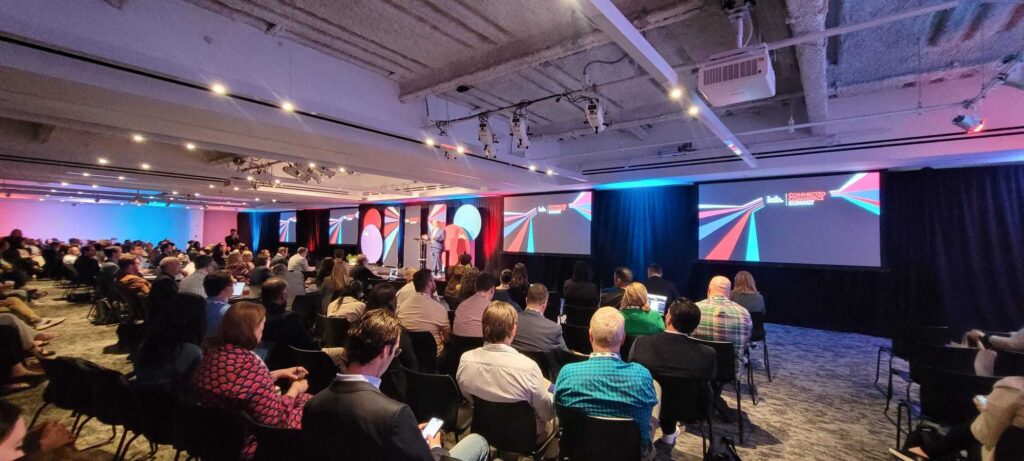
Collin Colburn, VP Commerce and Retail Media at IAB US captured the moment with four imperatives for progress:
Transparency, in particular, resonated across the room. As commerce expands across the ecosystem, interoperability and accountability become non‑negotiable. This is exactly where initiatives like IAB Europe’s Retail Media Certification play a critical role. By providing a shared framework for operational quality, data responsibility, and transparency, certification is becoming a marker of maturity in a market that urgently needs clarity and consistency.
The Summit also highlighted the shifting expectations of Gen Z, who value authenticity, reciprocal brand relationships, and in‑person retail experiences. Physical retail is re‑emerging as a discovery and social channel, and attribution models must adapt to non‑linear, shared purchase paths. Retail media itself is evolving from siloed placements into a connected commerce engine powered by shoppable media, integrated signals, and closed‑loop data.
AI and agentic commerce added another layer to the discussion. As AI systems begin to act autonomously on behalf of consumers, traditional decision points shrink, but new opportunities emerge. Retail media networks are well-positioned to become the data and infrastructure powering these agents. AI won’t replace retail media, but it will redefine which players remain relevant.
The moment things feel hard is often the moment just before a breakthrough. Commerce media is at that point now, and the question is whether the industry is ready to rise to the expectations that come with it.
Our AI Working Group has officially launched its latest industry-wide Impact of AI on Digital Advertising survey, inviting stakeholders from across the digital advertising ecosystem to share how artificial intelligence is reshaping the market.
Now in its second year, the survey has been significantly updated to reflect the industry’s most pressing questions and priorities around AI, offering a deeper and more nuanced view of how organisations are adopting, governing, and investing in this rapidly advancing space.
As AI continues to transform digital advertising, this year’s survey introduces a major redesign of its questions to better capture the realities facing the ecosystem today.
New areas of focus include:
In addition, the survey now includes tailored question sets for different parts of the supply chain, including publishers, ad tech companies, agencies, and advertisers, ensuring more relevant insights across the ecosystem.
The survey is designed to provide a comprehensive snapshot of how AI is being used across the industry, including:
The findings will help inform future industry initiatives and provide valuable benchmarks for organisations navigating AI adoption.
The survey is open to advertisers, agencies, ad tech companies, and publishers. It is best completed by leadership teams with visibility across operations, partnerships, and financials.
As a thank you for your time, you can choose to enter a prize draw for a chance to win one month of a pro subscription to an AI platform of your choice. All you have to do is enter your email address in the survey where indicated.
With AI advancing quickly, having a shared, data-driven understanding of adoption, challenges, and opportunities is more important than ever. This survey offers a practical way for organisations to benchmark their progress and contribute to a broader view of how AI is being implemented across digital advertising today.

Retail Media leaders from across Europe are set to gather at Retail MediaX Europe 2026 to share their experiences and learnings at a time of fast change.
More than 750 attendees are expected at the industry’s largest conference in Europe, which is taking place on 14th May at Convene, London, supported by headline sponsor Criteo. There, they can hear from more than 75 speakers across three conference tracks, while meeting and reconnecting with their peers in a variety of networking opportunities. The event opens at 08.00 and closes at 18.00.
A packed agenda stretches across three conference tracks, featuring presentations, debates, and networking opportunities. Retail Media leaders at Screwfix, Frasers Group, Trainline, Bol.com, Google and Kingfisher will share their insights, experiences and advice about how best to scale and create value at a time when the industry is now moving out of its start-up phase to become a broad-based commerce media ecosystem.
"Retail MediaX (RMX) Europe is where the people actually doing the work come to compare notes, challenge each other and swap what’s really working – on stage and on the show floor,” says Ian Jindal, founder of RetailX. “We’ve built RMX Europe around conversations, not keynotes where you sit back and forget. Expect full rooms, frank debate and the kind of off‑mic advice you only get when the whole industry is in one place. If you care about how retail media really drives brand and retail growth, not just slideware, you need to be in the room on 14th May.”
Learn from Retail Media Leaders
Retail MediaX Europe 2026 opens at 08.00 on 14th May for registration before conference chair Colin Lewis opens the event at 09.10. A panel featuring Roger Dunn of Retail Media & AI Consultancy and Zalando VP Joanna Rogers, will explore the next phase of the retail media industry as it continues to build scale before Criteo’s Andy Stephen, managing director, retail media UK, sets out the opportunities for growth across retailers and channels.
Colin Lewis, event chair, global Retail Media guru and RMX Podcast host, will lead a panel session exploring the findings of the Retail Media Report 2026. “I’ll be unpacking the Retail Media Report 2026 on stage, then stress‑testing it in panels, roundtables and show floor chats,” he says. “Bring questions, challenges and examples, because this is a working session for the industry, not a lean-back day.”
He adds: “Around the world, everyone talks about retail media. At RMX Europe, the people building the networks and writing the cheques actually show you how they’re doing it. The agenda this year mirrors the real conversations I’m having on the RMX Podcast (creativity, performance and innovation) but live, in a room full of people who can change things tomorrow in the office.”
From 1145, the event divides into three streams: Creativity and Collaboration, Impact and Performance, and Innovation and Technology. Speakers from brands and retailers including Frasers Group, Ocado Retail, Pepsico, WPP Media, Pearson and Dunnhumby will take centre stage in the conference streams.
The full event reconvenes for a keynote closing panel featuring Roxanne van Duijn, Google’s Retail Media lead in Germany, Justin Sandee, Director of Commercial Development at bol.com Retail Media, and Hélène Trad, Director of Retail Media at Kingfisher, who will together look ahead to what comes next for the Retail Media industry.
The day ends with an exclusive preview of Colin Lewis’ latest report, The Seven Challenges for Retail Media in 2026, and a final networking session.
Event organiser Mark Pigou, co-founder of RetailX, says: “Retail MediaX Europe is the annual meeting place for this industry – one day when brands, retailers, agencies and tech all clear the diary and get in the same room. We’ve designed the whole experience around meeting people. From the three track programme to structured networking and the RMX Award, and the conversations you have between sessions.
Last year’s event proved there’s huge appetite for a no‑nonsense forum where practitioners can swap what works, what doesn’t and what’s next. This year we’re doubling down on that energy.”
Commerce Media Festival
Retail MediaX Europe is part of RetailX Events’ Commerce Media Festival, with three events colocated on the same day: Retail MediaX Europe, the CTV Summit and the FMCG Summit. Delegate passes give access to all sessions at all three events, giving visitors the choice and opportunity to find the content that answers all their questions.
RetailX’s Jindal says: “It’s a Commerce Media festival since, in addition to three expert tracks on Retail MediaX, we have a conference on FMCG more broadly, and on CTV (connected and addressable TV). Performance marketers, exploring channels and surfaces with a data mindset, will recognise that the disciplines of commerce media keep extending.”
After the event ends, industry stars will head off to London’s highest venue, Horizon 22 – at 22 Bishopsgate – for the Retail MediaX Awards.
Event chair Lewis says, “After the conference comes the party! Join us at the RMX Awards, where we celebrate the industry change-makers, voted on by their peers. We’ll be raising the roof at London’s highest party venue – a fitting end for an intense day"
“Between the conference, the RMX Awards at Horizon 22 and the RMX Podcast, we’re stitching together one continuous conversation about the future of retail media. London is where it all comes together in person,” says RetailX’s Jindal.
Find out more about Retail MediaX 2026 here, explore the agenda here, and register to attend here.
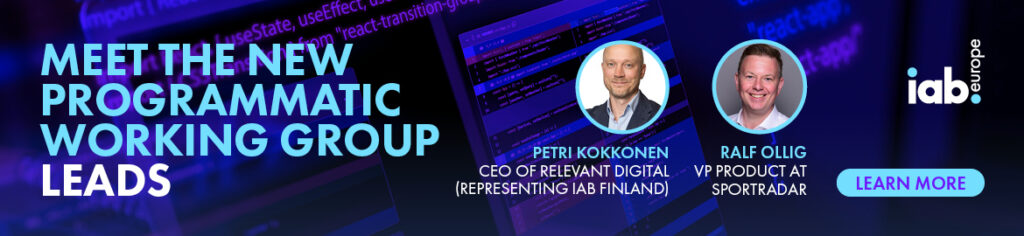
We are excited to introduce the newly appointed leads of our Programmatic Working Group within the Advertising and Media Committee. As the programmatic landscape continues to shift, their leadership will play a key role in guiding the group’s work, supporting industry alignment, strengthening standards, and addressing both current challenges and future opportunities.

Petri Kokkonen, CEO, Relevant Digital (representing IAB Finland)
We are pleased to welcome Petri Kokkonen, CEO of Relevant Digital, as Co-Lead of the Programmatic Working Group, representing IAB Finland.
Petri leads a sell-side SaaS and services company powering publishers across 21 countries in Europe, the Americas, and Asia. With over 20 years of involvement in the IAB ecosystem, he has played an active role in shaping industry initiatives, including representing IAB Finland on the IAB Europe Board and contributing to several working groups, most recently focused on Programmatic and AI. He continues to support IAB Finland as a Board Member.
Petri’s long-standing engagement and deep understanding of the European programmatic ecosystem position him to play an integral role in steering the group’s agenda, particularly in advancing a sustainable and diverse marketplace.
Commenting on his new role, Petri said: “I’m really excited to step into this shared role with Ralf, and I know that the whole IAB Finland team shares my enthusiasm. There is so much going on in the programmatic landscape right now, AI impacting every corner of the ecosystem. We need to do all we can to support local companies to navigate changes and continue to thrive, whether we're talking about buyers, sellers, or intermediaries.”

Ralf Ollig, VP Product, Sportradar
We are also pleased to welcome Ralf Ollig, VP Product at Sportradar, as Co-Lead of the Programmatic Working Group.
Ralf leads the development of data-driven sports advertising solutions across Programmatic, Paid Social, Search, and Audience Strategy within Sportradar. With over 15 years of experience in programmatic advertising, including roles at YouTube and as founder of a video-focused DSP, he brings strong expertise in building scalable, innovative advertising solutions.
Operating at the intersection of sports, data, and advertising, Ralf brings a forward-looking perspective to the group’s work. His experience will be key in shaping discussions around emerging channels, ever-changing supply-side dynamics, and the role of data in driving programmatic innovation.
Commenting on his new role, Ralf said: “As a long-time consumer of the IAB’s great work, I’ve seen firsthand the impact strong standards can have on our industry. I’m honoured to now step into the Co-Lead role alongside Petri at such a pivotal time. I’m looking forward to helping brands, publishers, tech platforms, and ultimately consumers navigate increasing complexity, while giving back to a community I’ve learned so much from, and continuing to learn together as we push the industry forward.”
The Programmatic Working Group supports stakeholders in navigating the programmatic landscape, addressing both core market dynamics and emerging trends.
The group focuses on driving collaboration and practical guidance across the ecosystem, with key priorities including:
Interested in contributing to the future of programmatic in Europe? Visit our website or contact the team at communication [at] iabeurope.eu to get involved.
Retail Media continues to mature at pace, bringing with it new opportunities and complexities for retailers, brands, and agencies alike. One of the most pressing dynamics shaping this space is the relationship between trade and media: how they intersect, where they diverge, and what the future holds.
To explore this, IAB Europe launched a five-part content series unpacking the convergence and coexistence of trade and media in Retail Media. Across expert insights, industry perspectives, and real-world case studies, the series highlights both the progress made and the challenges that remain.
Here’s a recap of the full series:
Developed in collaboration with IAB U.S, the series begins by defining the fundamental differences between trade and media, exploring how each has traditionally operated within retail environments. It sets the foundation for understanding why convergence is both appealing and complex.
Part two highlights how organisational silos between trade and media - driven by separate budgets, KPIs, and team structures - are limiting Retail Media’s full potential. It makes the case for greater alignment and budget fluidity, while acknowledging that structural and commercial complexities continue to slow progress.
While the first two pieces examined the challenge through a business and operational lens, the next layer is accounting. This explainer clarifies what’s actually possible within current accounting practices and outlines considerations shaping how different CMNs report, classify, and interpret their revenue.
This case study illustrates how one organisation made a decisive move to bring all media functions under a single roof. This is not presented as a universal blueprint or a recommendation, but rather as a thought‐starter for your exploration.
The final instalment completes the picture by bringing in the brand perspective, offering a nuanced view of how advertisers are navigating this landscape. It explores how a brand is navigating the developing relationship between trade and media, offering a candid perspective on the realities of convergence.
Commenting on the series, IAB Europe’s Retail Media Consultant, Yara Daher, said:
“This series is intended to spark industry dialogue. Trade and media have coexisted for years, but we need to think about them more cohesively. The tech that enables growth is crucial, but the organisational and commercial changes are equally—if not more—transformational for the industry.”
Get Involved
For more information on our Retail and Commerce Media work and how you can get involved, visit our Retail Media Hub here or get in touch with our Industry Development & Insights Director, Marie-Clare Puffett at puffett [at] iabeurope.eu.
Hear direct from broadcasters, brands and tech providers at the CTV Summit in London next month. Speakers from Channel 4, Netflix, Sky Media and ITV are set to help shape the agenda at the event, billed as a premier gathering for those with commercial intent in the connected TV ecosystem. It’s the forum where broadcasters and platform operators meet retailers, brands, agencies, as well as technology and service providers to explore how the channel is set to be shaped for the future as consumers turn to digital-first TV.
CTV Summit, part of RetailX Events’ Commerce Media Festival on 14th May, is set to welcome a strictly limited 200 attendees to Convene, London. Delegates at the event, which covers connected TV, OTT (over the top TV) and streaming and is supported by keynote sponsor Vidaa, will hear direct from leaders in this fast-growing industry with actionable insights on how to make their brand the centre of attention. The event promises to bring together broadcasters, brands and budgets in connected TV – the premier data source in broadcasting.
“CTV is coming into view for retail, digital and brand marketers as a cost‑effective performance channel that earns its place in the media plan,” says Ian Jindal, RetailX founder. “The CTV Summit is where marketers who grew up on search, social and retail media get hands‑on with TV’s reach, data and shoppability. It’s where TV, retail media and ecommerce start to look like one connected growth strategy.”
The CTV Summit 2026 opens on 14th May at 08.00 BST for registration and runs until 16.00, closing with a networking session. Highlights of the event, supported by keynote sponsor Vidaa, include a case study from Back Market’s Luke Forshaw on how the brand used CTV to reshape the narrative about refurbished tech. Later, ITV Director of Advanced Advertising, Rhys Mclachlan, Thinkbox CEO Lindsey Clay and Philip Gontier of Smadex join Ian Jindal for a discussion around the findings of the RetailX Connected TV 2026 report.
Netflix’s Brogane Colclough will make a presentation before Alex Wright of Channel 4, Ben O’Mahoney of Ocado Retail and David Sanderson of Sky Media join to discuss integrating CTV into commerce. Vidaa CEO Guy Edri explore how brands and retailers can use data to plan and run smarter campaigns across CTV, learning from behavioural insights.
“If you want to meet the broadcasters, platforms and retail media leaders who are turning CTV into a measurable sales channel, this is the room to be in,” says RetailX’s Jindal. “The CTV Summit is built as a working meeting. You sit with broadcasters, retailers and agencies who are rewriting the commercial rules of television in real time. For broadcasters and agencies, CTV Summit will be where they meet a new wave of clients who think in ROAS, incrementality and first‑party data. For marketers, it is TV that behaves like digital.”
Mark Pigou, RetailX founder and event organiser, adds: “The CTV Summit brings broadcasters, streamers, retailers, brands and agencies into one room to talk about money, measurement and where the growth really is. We have designed the day around conversations. Short sessions, high‑calibre panels and plenty of time for one‑to‑one meetings and networking.
This summit sits at the point where TV, streaming and commerce meet. That mix is why the event has grown so quickly, and why the right people clear their diaries for it. If you are serious about Connected TV, you cannot watch it from the sidelines. You need to be in London, listening, questioning and meeting the people who are making it happen.”
Commerce Media Festival
The CTV Summit is part of RetailX Events’ Commerce Media Festival. Three events are colocated on the same day, with Retail MediaX Europe 2026 and the FMCG Summit taking place alongside the CTV Summit. Delegate passes give access to all sessions at all three events, giving visitors the choice and opportunity to find the content that answers all their questions.
RetailX’s Pigou says: “The CTV Summit is part of the wider Commerce Media Festival. One ticket gives you access to the CTV conversations and the wider retail media and FMCG debates on the same day.”
After the event ends, industry stars will head off to London’s highest venue, Horizon 22 – at 22 Bishopsgate – for the Retail MediaX Awards.
Find out more about CTV Summit 2026 here, explore the agenda here, and register to attend here.

If programmatic advertising is on your radar this year, this is one event you won’t want to miss.
We’ve officially revealed the first speakers and full agenda for our Virtual Programmatic Day (VPD) 2026, taking place on 29th April at 12:00 CET, and it promises to bring together the most important conversations shaping the future of programmatic.
The hybrid event, hosted by Google, will combine live-streamed panels with a limited in-person audience in London, creating a dynamic forum to explore innovation, transparency, and growth across the programmatic ecosystem. Whether you plan to join us online or in London, you can secure your place here: register for virtual attendance and apply for in-person participation to be part of the conversation shaping the future of programmatic advertising.
Please note: Exclusive in-person access for IAB Europe Members only; limited capacity, confirmation required.
Programmatic continues to scale across channels and formats, from CTV and in-app to audio, DOOH, and retail media, but with growth comes complexity.
Challenges around supply chain transparency, AI-driven optimisation, measurement, and monetisation are no longer theoretical; they are urgent, practical, and happening right now.
VPD 2026 takes a comprehensive approach: rather than presenting a single viewpoint, the event brings together leading voices from across the ecosystem to challenge assumptions, share insights, and explore actionable strategies for 2026 and beyond.
The event’s agenda reflects the diversity of today’s programmatic landscape, offering panels and showcases designed to highlight emerging trends and practical solutions:
CTV, Now in Colour
CTV continues to expand at pace, bringing both opportunity and complexity. Industry leaders will discuss the challenges of measurement, data transparency, inventory fragmentation, and evolving viewer behaviour, while exploring how advertisers, agencies, and platforms can unlock the channel’s full potential.
The Growth Algorithm
Programmatic growth in 2026 is being driven by AI, new data frameworks, and expanding channels. Experts will unpack the technologies and strategies redefining campaign performance and ecosystem evolution.
Show Me the Monetisation
As media demand changes, what does it mean for publisher revenue? This session will explore changing inventory dynamics, buying modes, and monetisation strategies, helping publishers navigate the next phase of programmatic profitability.
The event will be hosted by the Advertising & Media Committee Chair, Wayne Tassie, Group Director, Netherlands, DoubleVerify.
He will be joined by a strong line-up of industry leaders spanning advertisers, publishers, and technology providers, including:
Programmatic is moving fast, but its future is still being defined.
Whether you plan to attend virtually or in person in London, view the event here and secure your spot today:
Stay ahead of the trends, explore actionable strategies, and be part of the conversations shaping programmatic advertising in 2026.